Tag: triptans

  • Medication Overuse Headache: How to Break the Cycle and Prevent Rebound Pain

    Medication Overuse Headache: How to Break the Cycle and Prevent Rebound Pain

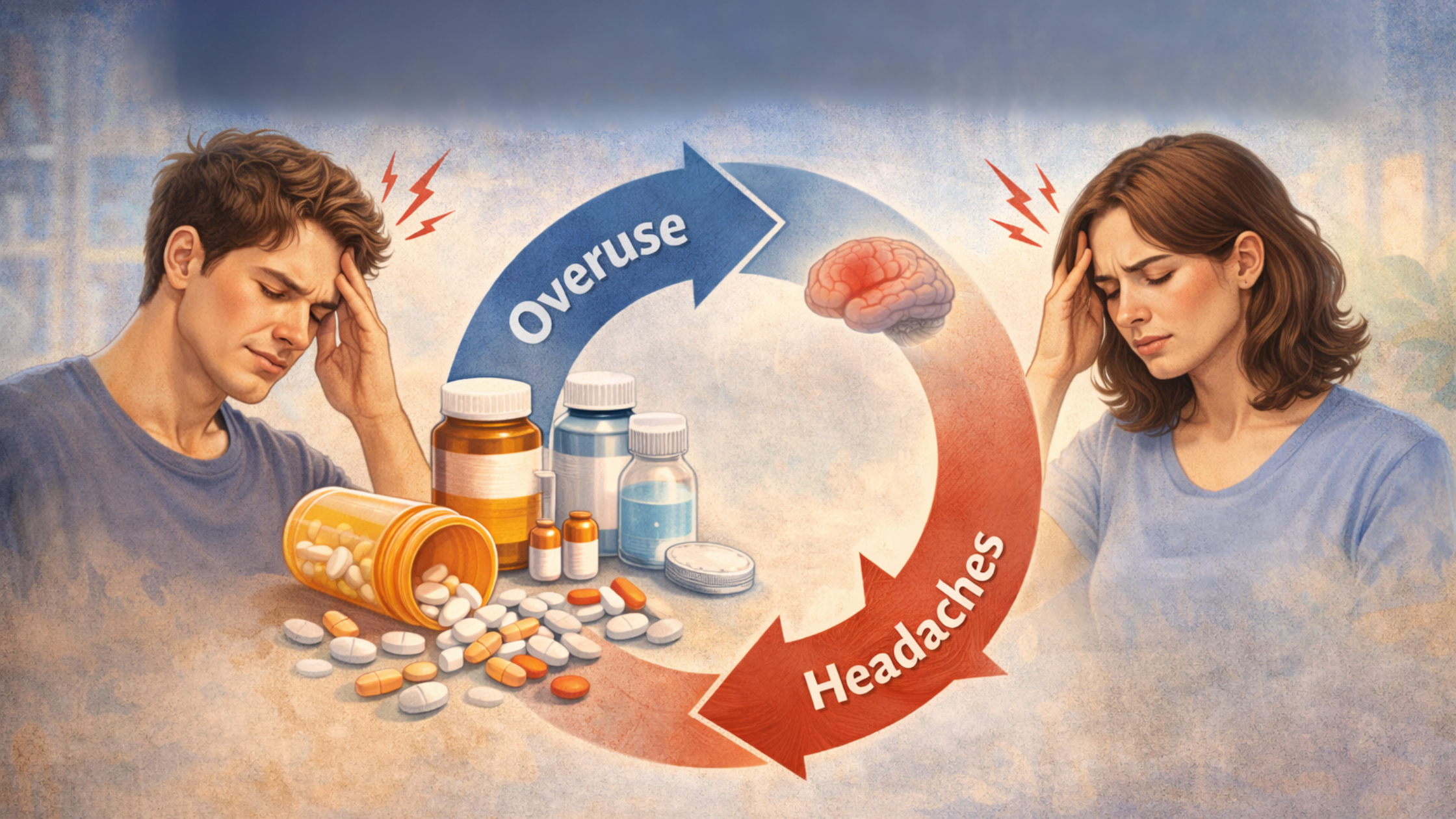
    If you’re struggling with migraine attacks, you know how hard it can be to find relief. Acute medications like triptans or NSAIDs can be a lifesaver—until they backfire. When painkillers are taken too often, they can trigger medication overuse headache, turning episodic migraine into a near-daily struggle.

    In this article, we’ll explain what medication overuse headache is, why it happens, and, most importantly, how to prevent and treat it so you can get back to living well.

    What Is Medication Overuse Headache?

    Medication overuse headache (MOH), also called rebound headache, happens when your brain becomes hypersensitive after frequent use of acute migraine drugs.

    According to the International Classification of Headache Disorders (ICHD-3), MOH is diagnosed if:

    • You have headaches 15 or more days per month.
    • You’ve overused acute headache meds for at least three months.
    • Your head pain has worsened during that time.

    Once you address the overuse, many people see a big improvement in frequency and severity.

    Why Does Medication Overuse Headache Occur?

    Researchers point to three main drivers:

    Neurochemical shifts: Overusing drugs like triptans or opioids alters serotonin, dopamine, and CGRP signaling in the brain.

    Central sensitization: Repeated dosing can over-activate pain pathways, making your brain more sensitive to triggers.

    Rebound effect: As medication levels drop, you get a rebound headache—and take more pills, trapping you in a cycle.

    Common Culprits in MOH

    Not all pain relievers carry the same risk. Knowing which medicines are most often involved can guide safer choices:

    Triptans (e.g., sumatriptan): Risk rises if used on 10 or more days per month.
    Combination analgesics (caffeine plus acetaminophen or aspirin): High risk when used frequently.

    Opioids: Even occasional use can quickly lead to MOH.

    NSAIDs (ibuprofen, naproxen): Moderate risk; safer than opioids but still risky if taken more than 15 days per month.

    Gepants: Growing evidence suggests these newer CGRP-receptor antagonists do not trigger MOH, making them a promising alternative.

    Recognizing the Warning Signs

    It can be hard to spot medication overuse headache because its symptoms overlap with chronic migraine. Watch for:

    • Pain that shifts from episodic attacks to nearly daily discomfort.
    • Short-lived relief from your usual meds, prompting more doses.
    • Higher pill counts on your headache diary or app

    If you see these patterns, talk with your doctor about MOH.

    How to Break Free: Three Key Steps

    1. Education and Awareness

    First, know that the headache itself may be fueled by the meds you’re taking. Our blog post on lifestyle tweaks (/lifestyle-migraine-tips) offers tips for non-drug strategies like hydration, sleep hygiene, and trigger management.

    2. Withdrawal or Reduction

    Tappering vs. abrupt stop

    Mild overuse can sometimes be tapered. Severe cases may need an abrupt stop under medical supervision.

    Supportive meds

    Short courses of NSAIDs, steroids, or antiemetics can ease withdrawal symptoms.

    Inpatient detox

    For complex situations, an overnight or week-long stay in a headache center may be best.
    According to a review in Neurology Journal, patients who complete a structured withdrawal program often see headache days cut by more than half.

    3. Preventive Therapy

    As you wean off overused drugs, start a preventive regimen. Options include:

    • Topiramate or valproate
    • Beta-blockers (propranolol, metoprolol)
    • CGRP monoclonal antibodies (erenumab, fremanezumab)
    • Candesartan (an angiotensin blocker)

    Partnering with your healthcare provider lets you find the right dose and manage side effects.

    Non-Drug Support
    Behavioral and lifestyle approaches make a big difference:

    • Cognitive-behavioral therapy (CBT) can change how you perceive pain and reduce stress.
    • Relaxation techniques like guided imagery or progressive muscle relaxation ease muscle tension.
    • Regular sleep, balanced diet, and exercise strengthen resilience against triggers.

    Preventing Medication Overuse Headache

    You don’t have to slip into MOH. Try these practical strategies:

    1. Set strict limits

    Take triptans or combination analgesics for no more than nine days per month. Keep NSAIDs or acetaminophen under 14 days per month.

    2. Track every dose.

    Use a headache diary or app to monitor patterns.

    3. Adopt a stepped approach.

    For mild pain, try non-drug tactics: rest in a dark room, apply a cold pack, practice deep breathing.

    4. Consider alternative therapies.

    Gepants (ubrogepant, rimegepant) and neuromodulation devices show promise without risk of rebound. Ask your neurologist if these suit you.

    Practical Tips for Smart Acute Treatment

    • Don’t chase every headache. Wait until pain reaches moderate intensity before treating.
    • Treat early and effectively. Taking your medication at the first sign of migraine can reduce total pills used.
    • Use combination therapy wisely. Pairing a triptan with an NSAID can enhance relief and cut rebound risk.

    When to Seek Professional Help

    If you’ve tried limits and still hit 15 days of headache per month, or if your relief window has shrunk, reach out to a headache specialist. Complex cases benefit from a multidisciplinary team including neurology, pain management, and behavioral therapy.

    Real-Life Success Story

    After hitting 20 headache days per month on sumatriptan and over-the-counter opioids, Sarah decided enough was enough. Under her doctor’s guidance, she gradually stopped opioids, used NSAIDs sparingly during a 10-day transition, and started erenumab for prevention.

    Within two months, her headache days dropped to eight per month, and she reclaimed weekends with her family.

    Key Takeaways

    Medication overuse headache can turn your migraine treatment into the problem—but it doesn’t have to stay that way.

    Focus on:

    • Awareness: Track use and set day limits.
    • Safe withdrawal: Plan with your healthcare team.
    • Prevention: Introduce a preventive medication early.
    • Non-drug tactics: CBT, relaxation, and lifestyle changes boost success.

    Regain control of your life by breaking the rebound cycle, one strategy at a time.

  • Rescue Strategies When First-Line Migraine Medications Fail

    Rescue Strategies When First-Line Migraine Medications Fail

    Even with a solid migraine treatment plan in place, not every attack will respond the way you hope. Triptans and NSAIDs may work beautifully most of the time, but occasionally they fall short.

    For others, first-line therapies prove unreliable more often than not, leading to long, painful attacks and added frustration. That’s where rescue strategies come in. These targeted backup options act as a safety net, helping patients regain control when standard treatments don’t do the job.

    Why First-Line Migraine Medications Sometimes Fail

    Migraine attacks can be unpredictable, and several factors can interfere with how well first-line medications work.

    Delayed treatment.

    Waiting too long to take medication often reduces the chance of stopping the attack.

    Nausea or vomiting.

    Many people experience gastric stasis during migraines, meaning oral medications may not absorb properly.

    Naturally resistant attacks.

    Some migraines—especially severe or prolonged ones—don’t respond easily to typical treatments.

    Individual differences.

    Not every patient reacts the same way to triptans, NSAIDs, or other first-line options. A medication that works for one person may not work for another.

    Understanding that treatment failure is common—and not your fault—can help reduce stress and encourage a proactive plan for escalation.

    Rescue Options You Can Use at Home

    Rescue strategies used at home can help break an attack before it becomes unmanageable.

    1. Switch to Faster Formulations

    For patients who vomit or experience slow digestion, non-oral formulations can be game-changing. Nasal sprays (such as zolmitriptan or sumatriptan) and subcutaneous sumatriptan work quickly and bypass the stomach entirely.

    2. Add an NSAID

    Combining a triptan with an NSAID like naproxen can boost effectiveness and prolong relief. Some patients use this combination selectively for more resistant attacks.

    3. Use Gepants

    Gepants such as rimegepant and ubrogepant are newer options that can serve as alternatives or backup treatments for those who cannot tolerate triptans or who find them ineffective.

    4. Add an Anti-Nausea Medication

    Medications like domperidone, metoclopramide, or prochlorperazine can reduce nausea—and importantly, improve absorption of oral medications. This makes them valuable additions when stomach symptoms interfere with treatment.

    5. Steroid “Bridge Therapy”

    For stubborn, multi-day attacks (status migrainosus), clinicians may prescribe a short steroid course like prednisone or a one-time dose of dexamethasone. This is not meant for routine use but can be helpful when nothing else breaks the cycle.

    Rescue Options in Urgent or Emergency Care

    When home measures fail, urgent or emergency care may be the safest and most effective option. In medical settings, clinicians may use:

    IV antiemetics
    Metoclopramide or prochlorperazine can relieve nausea and reduce headache intensity at the same time.

    IV NSAIDs (ketorolac)
    Ketorolac provides strong anti-inflammatory relief for moderate to severe attacks.

    IV fluids
    Especially helpful when dehydration or vomiting is a factor.

    Magnesium sulfate infusion
    Commonly used for migraine with aura or prolonged attacks.

    Nerve blocks
    Local anesthetic injections in the scalp or neck can interrupt migraine pain pathways and reset the attack cycle.

    To learn more about guidelines for acute migraine treatment, you can explore these authoritative sources:

    When to Use Rescue Treatments

    Rescue treatments should be used strategically, not as a default option. They are best suited for:

    • Attacks that do not respond to first-line medication within two hours
    • Migraines lasting more than 24–48 hours
    • Severe attacks that limit eating, drinking, or taking oral medications
    • Situations where usual treatments are contraindicated or poorly tolerated

    Working with a healthcare provider to create a written rescue plan helps ensure you know exactly how and when to escalate care safely.

    Avoiding Medication Overuse

    Rescue therapies are essential tools, but using them too frequently can signal a larger issue. If you rely on rescue medications more than a couple of times per month, it may be time to discuss preventive treatment. Preventive therapy can reduce attack frequency, severity, and reliance on rescue options.

    Practical Tips for Patients

    Have a clear plan. Work with your provider to outline specific rescue steps before you need them.

    Keep rescue medications on hand. Store them where you can access them at work, school, or while traveling.

    Choose the right route. If nausea interferes with oral medications, ask about nasal sprays or injectable forms.

    Monitor your usage. Tracking rescue medication frequency helps determine whether preventive strategies are needed.

    Don’t delay escalation. Early rescue treatment often works better than waiting until the attack becomes severe or prolonged.

    Take-Home Message

    Rescue strategies give migraine patients a crucial backup plan when first-line treatments fail. Options range from switching medication formulations to adding gepants, NSAIDs, or anti-nausea medications. In more resistant cases, medical care may offer IV therapy, magnesium, or nerve blocks. The goal isn’t to replace first-line therapy—it’s to make sure you’re never left without options. With a personalized rescue plan in place, you can face difficult attacks with greater confidence and less fear of prolonged suffering.

  • Triptans: When and How They Are Used for Migraine

    Triptans: When and How They Are Used for Migraine

    For many people living with migraine, over-the-counter pain relievers like acetaminophen or ibuprofen just don’t cut it. When an attack hits hard or keeps coming back, a stronger and more targeted option is often needed. That’s where triptans for migraine come in.

    Triptans have been a core part of acute migraine treatment since the 1990s. They’re still one of the most effective choices today—especially when taken at the right time and in the right form. Understanding how triptans work, when to use them, and how to stay safe with these medications can make a big difference in how well they relieve your attacks.

    What Are Triptans?

    Triptans are prescription medications created specifically to stop a migraine attack at its source. Unlike general painkillers, they act on serotonin (5-HT1B/1D) receptors in the brain. By targeting these receptors, triptans help:

    • Constrict painful, dilated blood vessels around the brain
    • Reduce the release of pain-signaling chemicals like CGRP
    • Interrupt pain pathways in the brainstem

    This combination makes triptans uniquely effective for acute attacks. Instead of simply dulling the pain, they help shut down the migraine process itself.

    You may recognize some of the commonly prescribed options: sumatriptan, rizatriptan, eletriptan, zolmitriptan, naratriptan, frovatriptan, and almotriptan. While they all act on the same receptors, each triptan varies slightly in onset, duration, and side-effect profile—which is why patients sometimes need to try more than one to find their perfect match.

    When Are Triptans Used?

    Doctors typically recommend triptans for:

    • Moderate to severe migraine attacks, or
    • Milder attacks that don’t respond to non-prescription pain relievers

    Timing is everything. Triptans work best when taken early in the attack, ideally within the first 30–60 minutes after the pain begins. They can still help later on, but their effectiveness decreases the longer the migraine has progressed.

    It’s also important to know what triptans are not designed for. They are not preventive medications and shouldn’t be taken daily. Instead, they’re meant for occasional, “as-needed” relief—usually no more than about 9–10 days per month to avoid medication overuse headache.

    How Are Triptans Taken?

    One of the benefits of triptans is their range of formulations. This makes it easier for patients with different symptoms to find something that works smoothly for them.

    Tablets

    These are the most common and convenient option. For many people with predictable attacks and manageable nausea, tablets work very well.

    Orally disintegrating tablets (ODTs)

    These dissolve on the tongue, which can be helpful if you tend to feel queasy or don’t have water handy.

    Nasal sprays

    Nasal sprays offer faster absorption and bypass the digestive system—ideal when nausea or vomiting makes swallowing pills difficult.

    Injections (subcutaneous)

    These provide the fastest and strongest relief and are often used for severe attacks, status migrainosus, or emergency settings. Sumatriptan injections, for example, can work in as little as 10–15 minutes.

    Many triptans come in several forms. Sumatriptan, in particular, is available as a tablet, nasal spray, and injection.

    How Effective Are Triptans?

    When taken early, triptans relieve migraine pain within two hours for about 60–70% of patients, based on evidence from peer-reviewed clinical studies such as those published in Cephalalgia and Headache: The Journal of Head and Face Pain.

    Beyond pain relief, many people also experience improvement in:

    • Nausea
    • Light sensitivity
    • Sound sensitivity

    If you get relief but the migraine returns later in the day, many triptans allow a second dose—just be sure to follow your prescription instructions carefully.

    Because everyone’s body responds differently, some patients may need to try more than one triptan to find the best match. Differences in absorption, speed, and formula make each option unique.

    Safety and Side Effects

    Most people tolerate triptans well, but side effects can happen. These are usually mild and temporary, and may include:

    • Warmth or flushing
    • Tingling sensations
    • Dizziness or drowsiness
    • Tightness in the jaw, throat, or chest (usually harmless but should still be discussed with a doctor)

    Because triptans constrict blood vessels, doctors avoid prescribing them for patients with certain cardiovascular conditions, including:

    • A past heart attack or stroke
    • Uncontrolled high blood pressure
    • Significant vascular disease

    For adults over 40 or those with cardiac risk factors, many healthcare providers perform a basic cardiovascular assessment before starting triptans. This helps ensure the medication can be used safely.

    Authoritative sources such as The New England Journal of Medicine and JAMA Neurology note these precautions as standard clinical guidance.

    Practical Tips for Getting the Most Out of Triptans

    Here are a few ways patients can optimize their response and avoid common pitfalls:

    Take early

    Use triptans at the first sign of pain. They generally don’t work during the aura phase, but they shine once headache pain begins.

    Don’t give up after one trial

    If one triptan doesn’t work, another often will. Many people need to test two or three before finding the ideal fit.

    Consider combination therapy

    Some providers recommend pairing a triptan with an NSAID like naproxen for stronger, longer-lasting relief. Ask your doctor whether this is appropriate for you.

    Avoid overuse

    To reduce the risk of medication overuse headache, limit triptans to 9–10 days per month.

    Track your response

    Keep notes on:

    • How fast the medication worked
    • Whether the attack returned
    • Any side effects

    This helps you and your healthcare team fine-tune your treatment plan.

    Access and Availability in Canada

    In Canada, all triptans require a prescription. Most private insurance plans cover at least one option, though specific coverage varies by province and insurer. Generic versions of medications like sumatriptan and rizatriptan help keep costs manageable.

    Because each triptan works a little differently, it’s helpful to discuss your lifestyle, migraine symptoms, and preferences with your provider. They can recommend the most appropriate formulation—whether that’s an ODT for nausea, a nasal spray for quick action, or an injection for severe attacks.

    When Triptans Aren’t Enough

    While triptans remain a first-line treatment for many people with migraine, they don’t work well for everyone. Some patients may respond poorly, while others cannot use them due to cardiovascular risks.

    In these situations, alternatives such as gepants (like rimegepant or ubrogepant) or ditans (such as lasmiditan) may be appropriate. These newer medications act on different pathways and provide options for patients who need an alternative to vasoconstrictive drugs.

    The Take-Home Message

    Triptans for migraine are one of the most effective, reliable tools for stopping acute attacks. By acting directly on serotonin receptors, they target the underlying biology of migraine instead of simply masking symptoms.

    When taken early—and used alongside a smart, personalized treatment plan—they can dramatically improve quality of life for many migraine patients. Work closely with your healthcare provider to choose the right formulation, monitor effectiveness, and use triptans safely within recommended limits.