
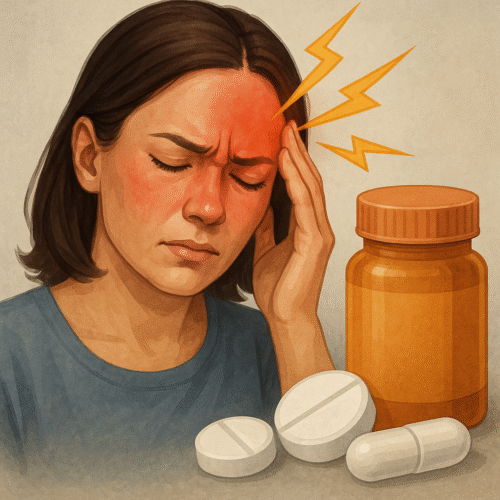
For many people living with migraine, over-the-counter pain relievers like acetaminophen or ibuprofen just don’t cut it. When an attack hits hard or keeps coming back, a stronger and more targeted option is often needed. That’s where triptans for migraine come in.
Triptans have been a core part of acute migraine treatment since the 1990s. They’re still one of the most effective choices today—especially when taken at the right time and in the right form. Understanding how triptans work, when to use them, and how to stay safe with these medications can make a big difference in how well they relieve your attacks.
What Are Triptans?
Triptans are prescription medications created specifically to stop a migraine attack at its source. Unlike general painkillers, they act on serotonin (5-HT1B/1D) receptors in the brain. By targeting these receptors, triptans help:
- Constrict painful, dilated blood vessels around the brain
- Reduce the release of pain-signaling chemicals like CGRP
- Interrupt pain pathways in the brainstem
This combination makes triptans uniquely effective for acute attacks. Instead of simply dulling the pain, they help shut down the migraine process itself.
You may recognize some of the commonly prescribed options: sumatriptan, rizatriptan, eletriptan, zolmitriptan, naratriptan, frovatriptan, and almotriptan. While they all act on the same receptors, each triptan varies slightly in onset, duration, and side-effect profile—which is why patients sometimes need to try more than one to find their perfect match.
When Are Triptans Used?
Doctors typically recommend triptans for:
- Moderate to severe migraine attacks, or
- Milder attacks that don’t respond to non-prescription pain relievers
Timing is everything. Triptans work best when taken early in the attack, ideally within the first 30–60 minutes after the pain begins. They can still help later on, but their effectiveness decreases the longer the migraine has progressed.
It’s also important to know what triptans are not designed for. They are not preventive medications and shouldn’t be taken daily. Instead, they’re meant for occasional, “as-needed” relief—usually no more than about 9–10 days per month to avoid medication overuse headache.
How Are Triptans Taken?
One of the benefits of triptans is their range of formulations. This makes it easier for patients with different symptoms to find something that works smoothly for them.
Tablets
These are the most common and convenient option. For many people with predictable attacks and manageable nausea, tablets work very well.
Orally disintegrating tablets (ODTs)
These dissolve on the tongue, which can be helpful if you tend to feel queasy or don’t have water handy.
Nasal sprays
Nasal sprays offer faster absorption and bypass the digestive system—ideal when nausea or vomiting makes swallowing pills difficult.
Injections (subcutaneous)
These provide the fastest and strongest relief and are often used for severe attacks, status migrainosus, or emergency settings. Sumatriptan injections, for example, can work in as little as 10–15 minutes.
Many triptans come in several forms. Sumatriptan, in particular, is available as a tablet, nasal spray, and injection.
How Effective Are Triptans?
When taken early, triptans relieve migraine pain within two hours for about 60–70% of patients, based on evidence from peer-reviewed clinical studies such as those published in Cephalalgia and Headache: The Journal of Head and Face Pain.
Beyond pain relief, many people also experience improvement in:
- Nausea
- Light sensitivity
- Sound sensitivity
If you get relief but the migraine returns later in the day, many triptans allow a second dose—just be sure to follow your prescription instructions carefully.
Because everyone’s body responds differently, some patients may need to try more than one triptan to find the best match. Differences in absorption, speed, and formula make each option unique.
Safety and Side Effects
Most people tolerate triptans well, but side effects can happen. These are usually mild and temporary, and may include:
- Warmth or flushing
- Tingling sensations
- Dizziness or drowsiness
- Tightness in the jaw, throat, or chest (usually harmless but should still be discussed with a doctor)
Because triptans constrict blood vessels, doctors avoid prescribing them for patients with certain cardiovascular conditions, including:
- A past heart attack or stroke
- Uncontrolled high blood pressure
- Significant vascular disease
For adults over 40 or those with cardiac risk factors, many healthcare providers perform a basic cardiovascular assessment before starting triptans. This helps ensure the medication can be used safely.
Authoritative sources such as The New England Journal of Medicine and JAMA Neurology note these precautions as standard clinical guidance.
Practical Tips for Getting the Most Out of Triptans
Here are a few ways patients can optimize their response and avoid common pitfalls:
Take early
Use triptans at the first sign of pain. They generally don’t work during the aura phase, but they shine once headache pain begins.
Don’t give up after one trial
If one triptan doesn’t work, another often will. Many people need to test two or three before finding the ideal fit.
Consider combination therapy
Some providers recommend pairing a triptan with an NSAID like naproxen for stronger, longer-lasting relief. Ask your doctor whether this is appropriate for you.
Avoid overuse
To reduce the risk of medication overuse headache, limit triptans to 9–10 days per month.
Track your response
Keep notes on:
- How fast the medication worked
- Whether the attack returned
- Any side effects
This helps you and your healthcare team fine-tune your treatment plan.
Access and Availability in Canada
In Canada, all triptans require a prescription. Most private insurance plans cover at least one option, though specific coverage varies by province and insurer. Generic versions of medications like sumatriptan and rizatriptan help keep costs manageable.
Because each triptan works a little differently, it’s helpful to discuss your lifestyle, migraine symptoms, and preferences with your provider. They can recommend the most appropriate formulation—whether that’s an ODT for nausea, a nasal spray for quick action, or an injection for severe attacks.
When Triptans Aren’t Enough
While triptans remain a first-line treatment for many people with migraine, they don’t work well for everyone. Some patients may respond poorly, while others cannot use them due to cardiovascular risks.
In these situations, alternatives such as gepants (like rimegepant or ubrogepant) or ditans (such as lasmiditan) may be appropriate. These newer medications act on different pathways and provide options for patients who need an alternative to vasoconstrictive drugs.
The Take-Home Message
Triptans for migraine are one of the most effective, reliable tools for stopping acute attacks. By acting directly on serotonin receptors, they target the underlying biology of migraine instead of simply masking symptoms.
When taken early—and used alongside a smart, personalized treatment plan—they can dramatically improve quality of life for many migraine patients. Work closely with your healthcare provider to choose the right formulation, monitor effectiveness, and use triptans safely within recommended limits.