
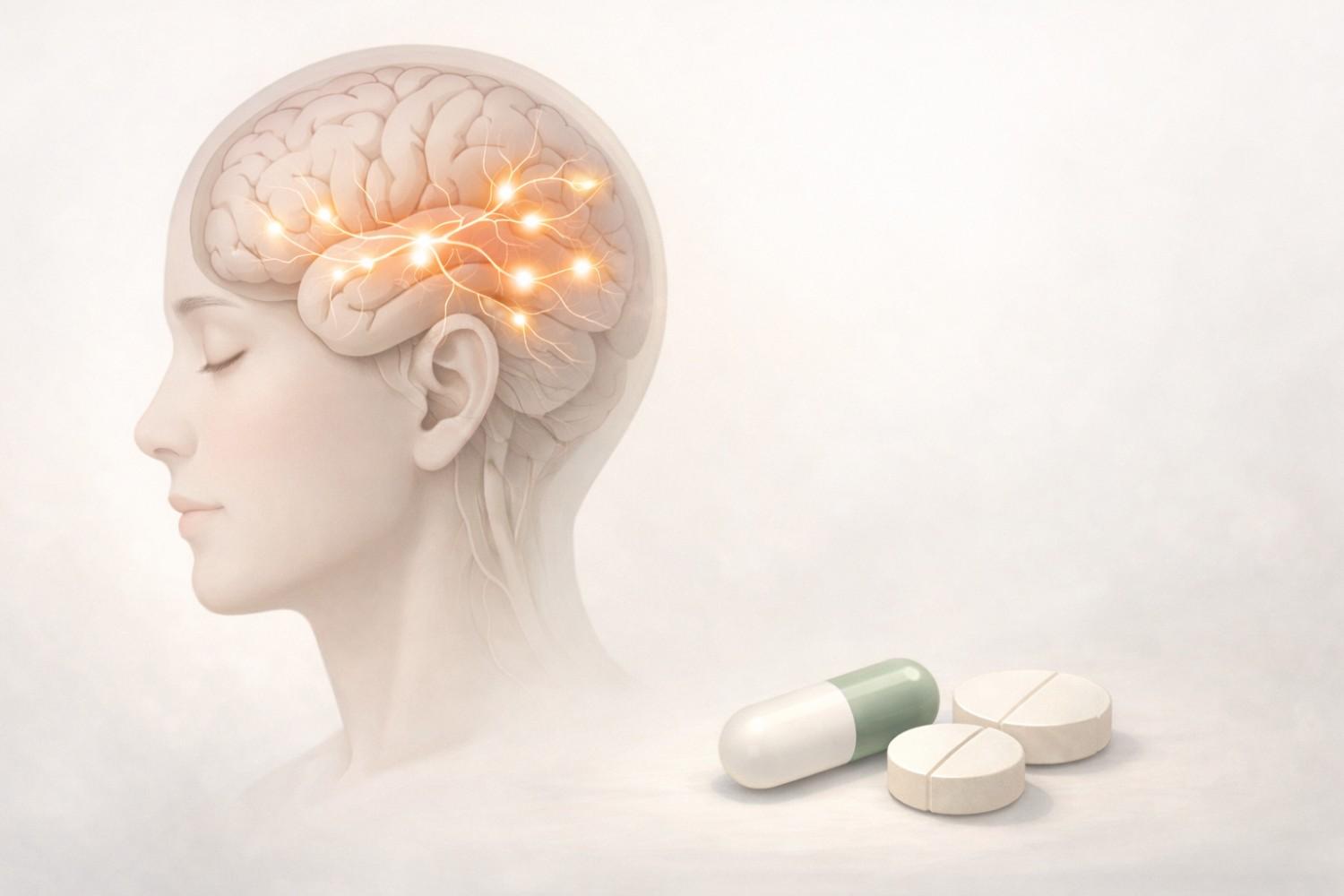
Some medications originally developed to treat depression and anxiety also play an important role in migraine prevention. Two of the most studied options are amitriptyline, a tricyclic antidepressant, and venlafaxine, a serotonin–norepinephrine reuptake inhibitor (SNRI).
Although these medications can improve mood and anxiety, their benefit in migraine is independent of their antidepressant effects. Many people without depression still respond well. For others, they offer a valuable dual benefit: fewer migraine attacks and better sleep or emotional stability.
Why Antidepressants Work for Migraine
Migraine is a disorder of brain pain regulation, not just blood vessels. Antidepressants act on several systems central to migraine biology.
Serotonin and Norepinephrine Modulation
Both serotonin and norepinephrine help regulate pain transmission in the brainstem. Dysregulation of these neurotransmitters is strongly linked to migraine susceptibility. Amitriptyline and venlafaxine help restore balance in these pathways.
Dampening Pain Pathways
By altering central pain-processing circuits, antidepressants reduce how strongly the brain responds to migraine triggers. This lowers overall attack frequency and intensity.
Improving Sleep Quality
Poor sleep is one of the most common migraine triggers. Amitriptyline, in particular, improves sleep depth and continuity, which can significantly improve migraine control.
Calming an Overexcitable Brain
Migraine brains are often hyperresponsive. Antidepressants reduce this baseline excitability, making attacks less likely to start.
Because of these effects, antidepressants can be effective even in people without depression or anxiety.
Amitriptyline for Migraine Prevention
Amitriptyline is one of the oldest and most studied migraine preventive medications.
Evidence
Clinical trials and long-term experience show that amitriptyline:
- Reduces migraine frequency, particularly in people with frequent attacks
- Is especially helpful in patients with insomnia, tension-type headache, or depression
- Achieves a 50% or greater reduction in migraine days in about 40–50% of patients
Its effectiveness is supported by research published in journals such as Headache: The Journal of Head and Face Pain and Neurology.
How It’s Taken
- Usually started at 10–25 mg at night
- Increased gradually as tolerated
- Typical effective dose: 25–75 mg nightly
Because it is sedating, amitriptyline is taken in the evening. Benefits develop gradually over several weeks.
Side Effects
Common side effects include:
- Drowsiness
- Dry mouth
- Constipation
- Weight gain
Less common but important:
- Heart rhythm changes, especially in older adults or at higher doses
Many people appreciate the sleep benefits, but some feel groggy in the morning. Dose timing and slow titration can help.
Venlafaxine for Migraine Prevention
Venlafaxine is an SNRI that works on both serotonin and norepinephrine, similar to amitriptyline but with a different side effect profile.
Evidence
Studies suggest venlafaxine is effective for migraine prevention, particularly at doses also used for anxiety or depression. It may be especially helpful for patients with generalized anxiety disorder or stress-triggered migraine.
Research supporting its use has appeared in journals such as Cephalalgia.
How It’s Taken
- Typically prescribed as 37.5–75 mg once daily (extended-release form)
- Can be increased if needed, though higher doses do not always improve migraine benefit
Consistent daily dosing is important.
Side Effects
Common side effects include:
- Nausea
- Jitteriness
- Sweating
- Insomnia
Venlafaxine can cause withdrawal symptoms if doses are missed, so adherence matters. At higher doses, it may raise blood pressure, requiring periodic monitoring.
Choosing Between Amitriptyline and Venlafaxine
The choice often depends on individual symptoms and tolerability.
- Amitriptyline may be preferred if insomnia, tension-type headache, or nighttime anxiety is prominent
- Venlafaxine may be a better option for patients with daytime fatigue or significant anxiety
- Both medications are generic, affordable, and widely available
Neither option is universally better—the best choice is highly individualized.
Who Should Avoid These Medications?
These drugs are not appropriate for everyone.
- Amitriptyline may not be ideal for people with obesity, known heart rhythm problems, or sensitivity to sedating medications
- Venlafaxine should be used cautiously in patients with uncontrolled high blood pressure or a history of severe antidepressant withdrawal
- Both medications are generally avoided during pregnancy unless benefits clearly outweigh risks, as safety data is limited
Always discuss personal risks with a healthcare provider.
Practical Tips for Patients
- Start low and go slow to minimize side effects
- Be patient—benefits often take 6–8 weeks
- Take consistently, especially with venlafaxine
- Track migraine days to assess effectiveness
- Report side effects early, as dose adjustments often help
Lifestyle measures such as regular sleep, stress management, and hydration enhance preventive treatment success.
Take-Home Message
Amitriptyline and venlafaxine are effective, affordable options for migraine prevention. By modulating serotonin and norepinephrine, they reduce migraine frequency and stabilize brain pain pathways.
For people with migraine plus depression, anxiety, or sleep problems, these medications may provide meaningful additional benefits. While side effects are common, many patients tolerate them well with gradual dose increases and consistent use.