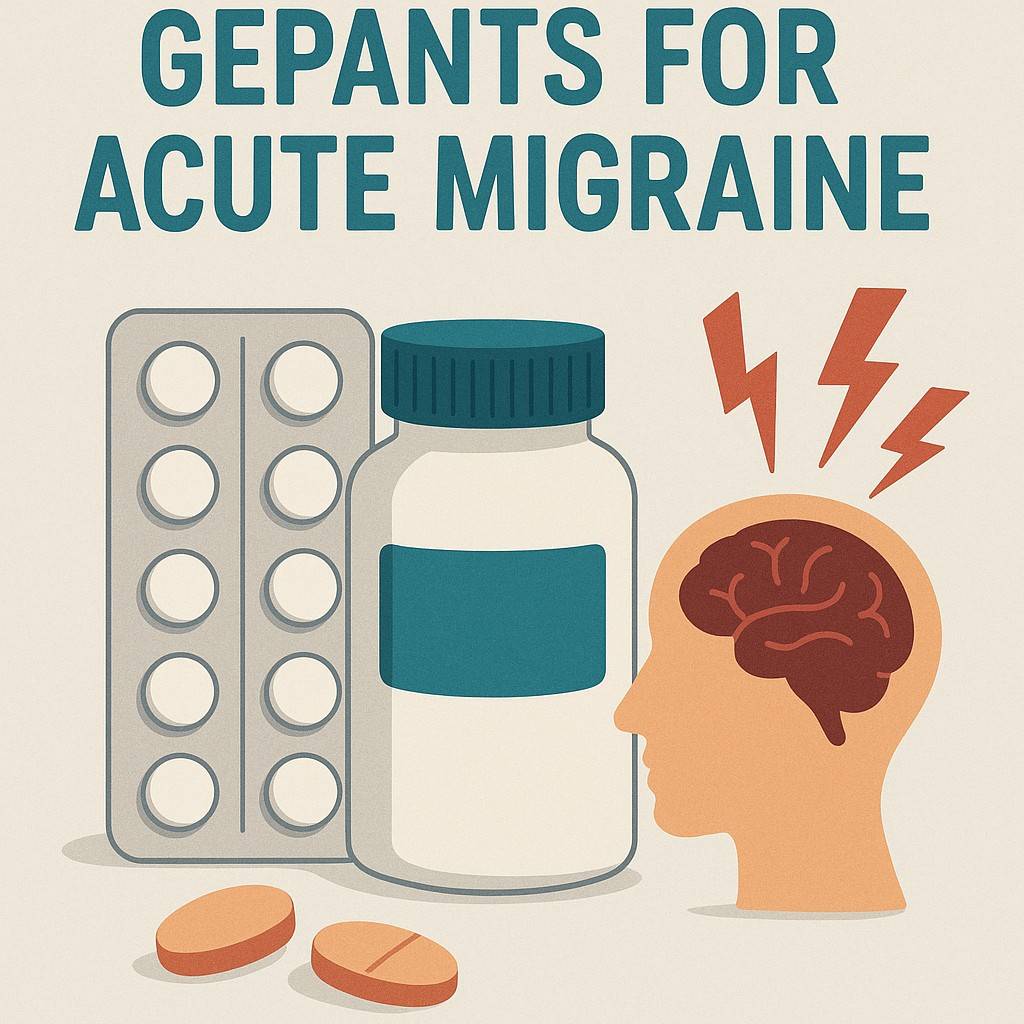

In recent years, gepants have become one of the most important advances in migraine treatment. While originally developed for acute migraine relief, certain gepants are now also approved for migraine prevention. Unlike older oral preventives—many of which were borrowed from epilepsy, depression, or blood pressure treatment—gepants were designed specifically around migraine biology.
The two oral gepants approved for migraine prevention are atogepant and rimegepant. For many patients, they offer an effective and well-tolerated preventive option without the drawbacks of traditional therapies.
How Gepants Work in Migraine
Migraine is driven in large part by the activity of calcitonin gene-related peptide (CGRP). During a migraine attack, CGRP is released from trigeminal nerve endings, leading to several downstream effects.
CGRP:
- Dilates blood vessels in the brain
- Increases inflammation around pain-sensitive nerves
- Amplifies pain signaling pathways
Gepants work by blocking the CGRP receptor, preventing CGRP from activating these migraine pathways. By interrupting this process early, gepants reduce the brain’s sensitivity to migraine triggers and help prevent attacks before they start.
Extensive research on CGRP’s role in migraine has been published in journals such as The New England Journal of Medicine and Cephalalgia.
Atogepant (Qulipta) for Migraine Prevention
Atogepant is the first gepant approved specifically for preventive treatment of migraine.
Evidence for Effectiveness
Large randomized clinical trials, including ADVANCE and PROGRESS, demonstrated that atogepant is effective in both episodic and chronic migraine.
Key findings include:
- An average reduction of 4–7 monthly migraine days
- Approximately 50–60% of patients achieved at least a 50% reduction in migraine frequency
- Benefits were sustained over long-term follow-up, with continued improvement over months
Results from these trials were published in leading journals such as The Lancet and JAMA.
Dosing
- Taken once daily by mouth
- Available doses range from 10 mg to 60 mg, depending on patient profile and tolerability
The simplicity of once-daily dosing makes atogepant easy to integrate into daily routines.
Side Effects
Atogepant is generally well tolerated. The most commonly reported side effects are:
- Constipation
- Nausea
- Fatigue
Compared with older oral preventives, systemic side effects are usually mild.
Rimegepant (Nurtec ODT) for Migraine Prevention
Rimegepant is unique among migraine medications because it is approved for both acute and preventive treatment.
Evidence for Effectiveness
In preventive trials, patients taking rimegepant every other day experienced:
- A reduction of 4–5 monthly migraine days compared with placebo
- Sustained benefit over one year of treatment
- Improved quality-of-life scores and reduced need for acute medications
These findings have been published in Headache: The Journal of Head and Face Pain and Neurology.
Dosing
- 75 mg orally disintegrating tablet (ODT)
- Taken every other day for prevention
- Dissolves on the tongue without water, offering convenience and discretion
Side Effects
- Nausea is the most commonly reported side effect
- Overall tolerability is excellent
- Rare hypersensitivity reactions have been reported
Gepants vs CGRP Monoclonal Antibodies
Both gepants and CGRP monoclonal antibodies target the CGRP pathway, but they differ in how they are used.
- Gepants (atogepant, rimegepant)
- Oral dosing (daily or every other day)
- Shorter-acting and fully reversible
- Mild gastrointestinal side effects in some patients
- CGRP monoclonal antibodies
- Injectable (monthly or quarterly)
- Long-acting and convenient for adherence
- Injection-site reactions or constipation in some patients
Both approaches are highly effective. The choice often depends on patient preference, insurance coverage, comorbid conditions, and prior treatment response.
Who Should Consider Gepants for Prevention?
Preventive gepants may be a good option for:
- Patients with frequent migraine attacks not well controlled on older preventives
- Those who cannot tolerate topiramate, beta-blockers, or antidepressants
- Patients who prefer oral therapy over injections
- People with migraine and cardiovascular disease, where triptans or some older preventives may be limited
Access and Coverage in Canada
Access to gepants continues to evolve in Canada.
Currently:
- Atogepant is approved for migraine prevention, with coverage depending on private insurance or special authorization
- Rimegepant is approved for both acute and preventive use, though not all provincial drug plans cover it yet
- Out-of-pocket costs can be high without insurance
Manufacturer patient support programs and private insurance plans may help reduce financial barriers.
Practical Tips for Patients
- Take consistently: Preventive gepants work best when taken on schedule
- Track migraine days to assess benefit and support coverage approvals
- Be patient: Improvement often begins within 4–8 weeks, with full benefit by about 3 months
- Report side effects, especially persistent constipation or fatigue
- Ask about coverage support, including manufacturer programs
Lifestyle strategies such as regular sleep, hydration, and stress management further improve outcomes.
Take-Home Message
Atogepant and rimegepant represent a major step forward in migraine prevention. By targeting the CGRP pathway with convenient oral dosing, they provide effective and well-tolerated alternatives to traditional preventive medications.
For patients seeking an oral option without the cognitive, weight, or cardiovascular side effects of older therapies, gepants offer new hope for long-term migraine control.