
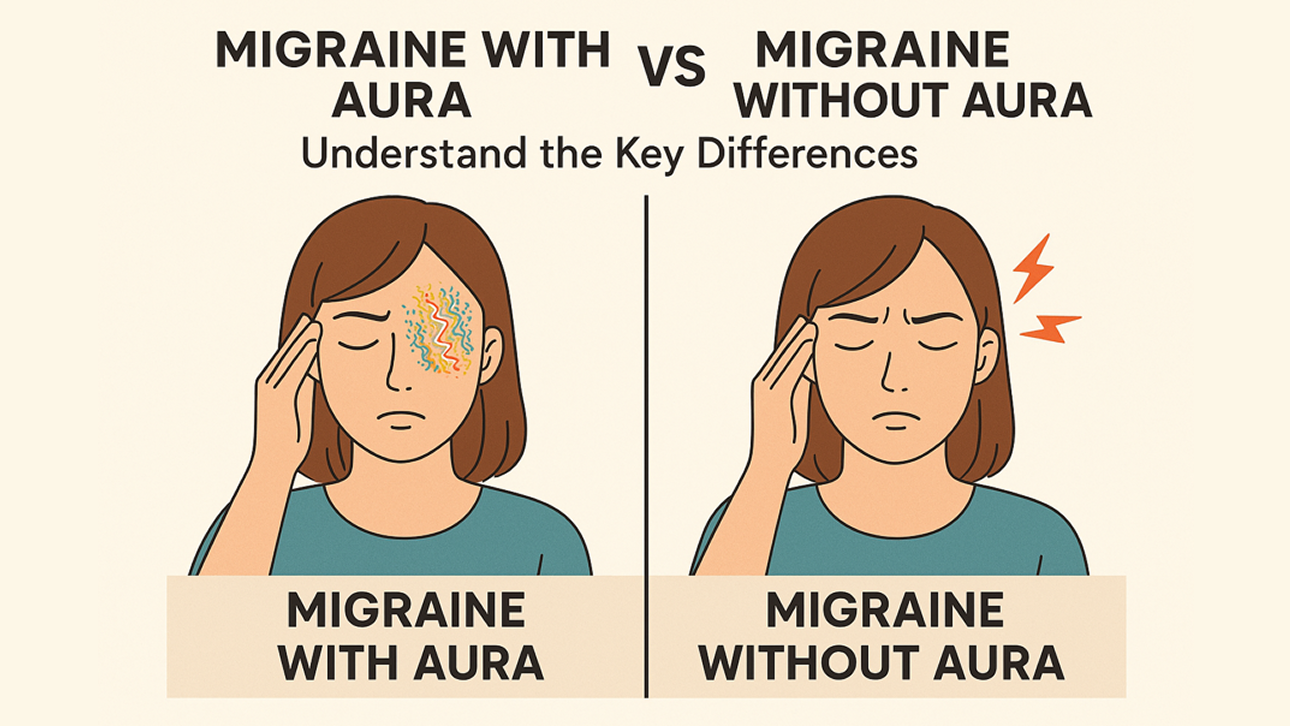
Migraines are not a one-size-fits-all condition. While all types share hallmark symptoms like recurring head pain, nausea, and sensitivity to light or sound, there are important distinctions within the diagnosis. The two most common forms are migraine without aura (often called common migraine) and migraine with aura (sometimes referred to as classic migraine).
Understanding the difference between these types is vital for accurate diagnosis, treatment planning, and patient reassurance.
What Is Aura?
An aura is a collection of temporary neurological symptoms that occur before or during a migraine attack. These symptoms are caused by brief, reversible changes in brain activity and blood flow. Auras typically develop gradually over 5–20 minutes and usually resolve within an hour.
Common Types of Aura
- Visual aura: The most frequent form. Patients may see flashing lights, shimmering shapes, zigzag lines, or blind spots. Some describe it as “looking through broken glass.”
- Sensory aura: Numbness or tingling that often starts in one hand and moves up the arm or face.
- Language aura: Temporary difficulty speaking or finding words.
- Motor aura: Rare, but can cause weakness or paralysis on one side of the body (known as hemiplegic migraine).
Not every aura is followed by head pain—some people experience aura without headache, also called acephalgic migraine. This can be confusing and may lead to unnecessary testing, especially when symptoms mimic stroke or seizure.
According to The Lancet Neurology, aura symptoms stem from a phenomenon called cortical spreading depression, a wave of electrical activity across the brain’s surface that temporarily alters blood flow.
Migraine without Aura
Migraine without aura is the most common type, affecting about 70–75% of people with migraine.
Typical symptoms include:
- Throbbing or pulsating pain (usually on one side)
- Pain aggravated by routine physical activity
- Moderate to severe intensity
- Nausea, vomiting, or sensitivity to light and sound
Attacks usually last 4–72 hours if untreated and can be highly disabling. Despite lacking aura, this form is a true migraine and equally deserving of effective treatment and preventive care.
Migraine with Aura
Migraine with aura affects roughly 25–30% of migraine patients. The defining feature is the presence of reversible neurological symptoms that occur before or during the headache.
A typical episode may unfold as follows:
- Aura phase: Gradual onset of visual changes or sensory disturbances lasting 5–60 minutes.
- Headache phase: The migraine pain follows, sharing the same characteristics as migraine without aura.
- Postdrome phase: After the pain subsides, patients may feel fatigued, foggy, or low in mood for a day or more.
Research published in Cephalalgia: The Journal of Headache and Face Pain notes that migraine with aura may carry a slightly increased risk of ischemic stroke, particularly in women under 45 who smoke or use estrogen-containing contraceptives. For this reason, clinicians assess vascular risk factors carefully when prescribing birth control or preventive therapies
Clinical Distinctions and Diagnosis
While both forms share similar pain characteristics, the presence or absence of aura defines the diagnosis.
Diagnostic Criteria
- Migraine without aura: Diagnosed based on headache characteristics—one-sided, pulsating, moderate-to-severe intensity, aggravated by activity, and accompanied by nausea or sensitivity to light/sound.
- Migraine with aura: Requires at least two attacks with aura symptoms that are fully reversible, develop gradually, and last less than 60 minutes, followed by headache within an hour.
Other conditions such as stroke, seizure, or transient ischemic attack (TIA) can mimic aura. However, a key difference is that aura develops gradually, whereas stroke or seizure symptoms are sudden and maximal at onset.
Doctors may recommend neuroimaging (MRI or CT) if aura symptoms are atypical, prolonged, or appear for the first time later in life, according to the American Headache Society.
Why the Difference Matters for Patients
Recognizing whether your migraine includes aura has practical implications for care and peace of mind.
1. Treatment
Most acute and preventive migraine treatments work for both types. However, documenting aura patterns helps clinicians avoid unnecessary investigations and tailor therapies more effectively.
2. Stroke Risk
Migraine with aura has a slightly higher vascular risk profile, especially in women who smoke or use hormonal contraceptives. Reducing smoking, managing blood pressure, and using non-estrogen contraceptive methods can lower risk.
3. Patient Reassurance
Aura symptoms can be alarming, but they are benign and reversible. Knowing that aura doesn’t mean “brain damage” helps reduce anxiety and empowers patients to respond appropriately during attacks.
4. Monitoring Changes
Patients should report any change in aura pattern—such as longer duration, new sensory features, or attacks without pain—to their healthcare provider.
Practical Tips for Patients
- Track your symptoms: Keep a migraine diary noting whether visual changes or tingling occur before the headache.
- Recognize early warning signs: Aura can act as an early signal to take acute medication sooner, improving relief.
- Avoid confusion with other issues: Not all visual changes are aura—eye strain, dehydration, or low blood sugar can mimic it.
- Discuss contraception and lifestyle: If you experience migraine with aura, talk to your doctor about safe contraceptive options and managing vascular risks.
- Stay reassured: Aura can be unsettling but is part of the migraine spectrum, not a sign of a stroke.
You can read more about migraine triggers or preventive migraine treatments for additional guidance.
Take-Home Message
Migraine with aura and migraine without aura represent two points on the same neurological spectrum. The key difference lies in whether the patient experiences temporary neurological warning signs such as visual changes, tingling, or speech disturbances.
Both forms are real, disabling, and deserve appropriate medical attention. Understanding your migraine type helps guide treatment, reduce anxiety, and empower you to manage symptoms more effectively.