
Tag: medication overuse headache

  • Medication Overuse Headache: How to Break the Cycle and Prevent Rebound Pain

    Medication Overuse Headache: How to Break the Cycle and Prevent Rebound Pain

    If you’re struggling with migraine attacks, you know how hard it can be to find relief. Acute medications like triptans or NSAIDs can be a lifesaver—until they backfire. When painkillers are taken too often, they can trigger medication overuse headache, turning episodic migraine into a near-daily struggle.

    In this article, we’ll explain what medication overuse headache is, why it happens, and, most importantly, how to prevent and treat it so you can get back to living well.

    What Is Medication Overuse Headache?

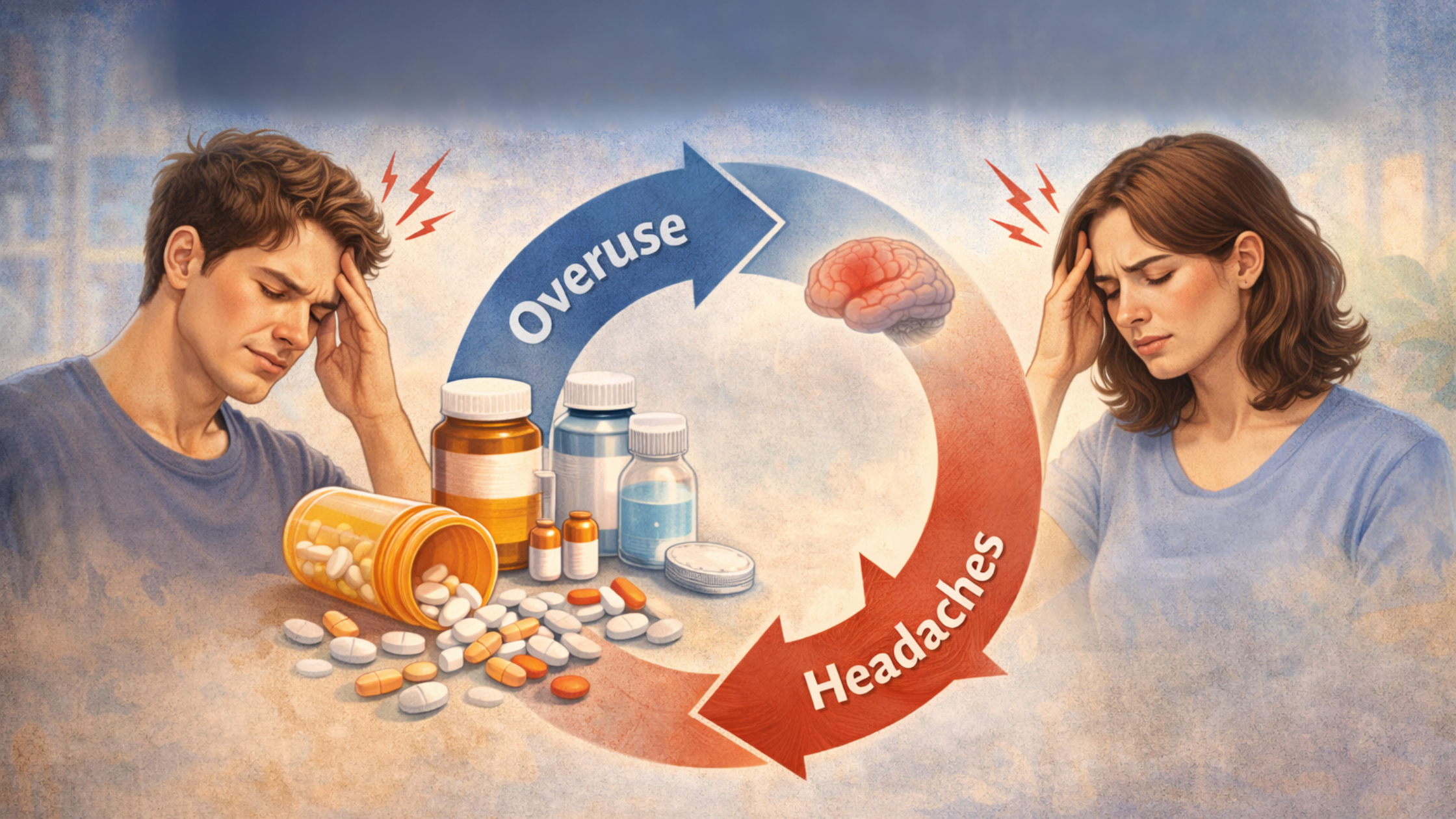
    Medication overuse headache (MOH), also called rebound headache, happens when your brain becomes hypersensitive after frequent use of acute migraine drugs.

    According to the International Classification of Headache Disorders (ICHD-3), MOH is diagnosed if:

    • You have headaches 15 or more days per month.
    • You’ve overused acute headache meds for at least three months.
    • Your head pain has worsened during that time.

    Once you address the overuse, many people see a big improvement in frequency and severity.

    Why Does Medication Overuse Headache Occur?

    Researchers point to three main drivers:

    Neurochemical shifts: Overusing drugs like triptans or opioids alters serotonin, dopamine, and CGRP signaling in the brain.

    Central sensitization: Repeated dosing can over-activate pain pathways, making your brain more sensitive to triggers.

    Rebound effect: As medication levels drop, you get a rebound headache—and take more pills, trapping you in a cycle.

    Common Culprits in MOH

    Not all pain relievers carry the same risk. Knowing which medicines are most often involved can guide safer choices:

    Triptans (e.g., sumatriptan): Risk rises if used on 10 or more days per month.
    Combination analgesics (caffeine plus acetaminophen or aspirin): High risk when used frequently.

    Opioids: Even occasional use can quickly lead to MOH.

    NSAIDs (ibuprofen, naproxen): Moderate risk; safer than opioids but still risky if taken more than 15 days per month.

    Gepants: Growing evidence suggests these newer CGRP-receptor antagonists do not trigger MOH, making them a promising alternative.

    Recognizing the Warning Signs

    It can be hard to spot medication overuse headache because its symptoms overlap with chronic migraine. Watch for:

    • Pain that shifts from episodic attacks to nearly daily discomfort.
    • Short-lived relief from your usual meds, prompting more doses.
    • Higher pill counts on your headache diary or app

    If you see these patterns, talk with your doctor about MOH.

    How to Break Free: Three Key Steps

    1. Education and Awareness

    First, know that the headache itself may be fueled by the meds you’re taking. Our blog post on lifestyle tweaks (/lifestyle-migraine-tips) offers tips for non-drug strategies like hydration, sleep hygiene, and trigger management.

    2. Withdrawal or Reduction

    Tappering vs. abrupt stop

    Mild overuse can sometimes be tapered. Severe cases may need an abrupt stop under medical supervision.

    Supportive meds

    Short courses of NSAIDs, steroids, or antiemetics can ease withdrawal symptoms.

    Inpatient detox

    For complex situations, an overnight or week-long stay in a headache center may be best.
    According to a review in Neurology Journal, patients who complete a structured withdrawal program often see headache days cut by more than half.

    3. Preventive Therapy

    As you wean off overused drugs, start a preventive regimen. Options include:

    • Topiramate or valproate
    • Beta-blockers (propranolol, metoprolol)
    • CGRP monoclonal antibodies (erenumab, fremanezumab)
    • Candesartan (an angiotensin blocker)

    Partnering with your healthcare provider lets you find the right dose and manage side effects.

    Non-Drug Support
    Behavioral and lifestyle approaches make a big difference:

    • Cognitive-behavioral therapy (CBT) can change how you perceive pain and reduce stress.
    • Relaxation techniques like guided imagery or progressive muscle relaxation ease muscle tension.
    • Regular sleep, balanced diet, and exercise strengthen resilience against triggers.

    Preventing Medication Overuse Headache

    You don’t have to slip into MOH. Try these practical strategies:

    1. Set strict limits

    Take triptans or combination analgesics for no more than nine days per month. Keep NSAIDs or acetaminophen under 14 days per month.

    2. Track every dose.

    Use a headache diary or app to monitor patterns.

    3. Adopt a stepped approach.

    For mild pain, try non-drug tactics: rest in a dark room, apply a cold pack, practice deep breathing.

    4. Consider alternative therapies.

    Gepants (ubrogepant, rimegepant) and neuromodulation devices show promise without risk of rebound. Ask your neurologist if these suit you.

    Practical Tips for Smart Acute Treatment

    • Don’t chase every headache. Wait until pain reaches moderate intensity before treating.
    • Treat early and effectively. Taking your medication at the first sign of migraine can reduce total pills used.
    • Use combination therapy wisely. Pairing a triptan with an NSAID can enhance relief and cut rebound risk.

    When to Seek Professional Help

    If you’ve tried limits and still hit 15 days of headache per month, or if your relief window has shrunk, reach out to a headache specialist. Complex cases benefit from a multidisciplinary team including neurology, pain management, and behavioral therapy.

    Real-Life Success Story

    After hitting 20 headache days per month on sumatriptan and over-the-counter opioids, Sarah decided enough was enough. Under her doctor’s guidance, she gradually stopped opioids, used NSAIDs sparingly during a 10-day transition, and started erenumab for prevention.

    Within two months, her headache days dropped to eight per month, and she reclaimed weekends with her family.

    Key Takeaways

    Medication overuse headache can turn your migraine treatment into the problem—but it doesn’t have to stay that way.

    Focus on:

    • Awareness: Track use and set day limits.
    • Safe withdrawal: Plan with your healthcare team.
    • Prevention: Introduce a preventive medication early.
    • Non-drug tactics: CBT, relaxation, and lifestyle changes boost success.

    Regain control of your life by breaking the rebound cycle, one strategy at a time.

  • Preventing Medication Overuse Headache During Acute Migraine Treatment

    Preventing Medication Overuse Headache During Acute Migraine Treatment

    Medication overuse headache (MOH) is one of the most frustrating challenges for people living with migraine. Acute treatments are essential for stopping an attack quickly—but when they’re used too often, they can make headaches more frequent and more stubborn. The good news? With the right strategies, MOH is almost always preventable.

    In this guide, you’ll learn what medication overuse headache is, why it happens, which medications carry the greatest risk, and how to keep your acute treatment plan safe and effective long-term.

    What Is Medication Overuse Headache?

    Medication overuse headache—sometimes called rebound headache—develops when frequent use of acute migraine medications begins to fuel a cycle of worsening headaches. Instead of breaking the migraine pattern, the medications start to sustain it.

    According to internationally accepted diagnostic criteria, MOH involves:

    • Headache occurring 15 or more days per month in someone with a pre-existing headache disorder
    • Regular overuse of acute medications for more than 3 months
    • Headache symptoms not better explained by another condition

    While MOH can feel discouraging, understanding why it happens is the first step to breaking the cycle.

    Which Medications Carry a Risk?

    Not all acute migraine treatments pose the same risk for MOH. Knowing where your medications fall can help you make informed choices.

    High Risk

    • Combination analgesics (especially those containing caffeine, opioids, or barbiturates)
    • Opioids of any kind

    These medications can trigger MOH quickly and should be used sparingly in migraine treatment.

    Moderate Risk

    • Triptans
    • NSAIDs
    • Acetaminophen

    These are frontline acute therapies for many migraineurs, but they should still be taken within safe monthly limits.

    No Known MOH Risk

    • Gepants: rimegepant, ubrogepant
    • Ditans: lasmiditan

    Clinical studies show gepants do not cause medication overuse headache, making them a valuable option for people who experience frequent attacks or are prone to MOH.

    For more on the science behind acute migraine treatments, see the American Migraine Foundation’s overview.

    Why Does Medication Overuse Headache Develop?

    Researchers are still learning the exact biology behind MOH, but several key mechanisms are believed to play a role:

    Brain Adaptation

    Frequent exposure to certain pain medications can change how pain pathways work, lowering the threshold for headache.

    Central Sensitization

    The nervous system becomes “extra sensitive,” reacting strongly even to normal stimuli.

    Withdrawal–Rebound Cycles

    When the body becomes accustomed to regular dosing, missing a dose may trigger worsening symptoms, strengthening the overuse cycle.

    Over time, these changes can make headaches more common, harder to treat, and difficult to distinguish from a person’s usual migraine attacks.

    For clinical context, you can review diagnostic insights in Headache: The Journal of Head and Face Pain.

    How to Prevent Medication Overuse Headache

    Preventing MOH doesn’t require giving up effective acute treatments. It simply means using them in a way that supports long-term migraine control.

    1. Track Medication Frequency

    Using a headache diary or mobile app opens your eyes to patterns you might miss. Tracking helps you stay aware of how often you’re using acute medications each month.

    2. Follow the “10–15 Rule”

    Most acute medications should be limited to:

    • 10 days per month for triptans, combination analgesics, and opioids
    • 10–15 days per month for NSAIDs or acetaminophen

    Going beyond these thresholds—especially for several months—significantly increases MOH risk.

    3. Add Preventive Therapy When Needed

    If you need acute medication more than 8–10 times per month, preventive treatment is worth discussing with your doctor. Options may include:

    • CGRP monoclonal antibodies
    • Topiramate
    • Beta-blockers

    Preventive medications reduce attack frequency, which naturally reduces acute medication use.

    4. Avoid Treating Every Mild Headache

    Not all headaches require a triptan or strong NSAID. Learning to differentiate between tension-type headaches and true migraine attacks helps protect against overuse.

    5. Create a Rescue Plan With Your Doctor

    A well-designed rescue plan prevents repeat dosing and unnecessary medication use. It may include:

    • A back-up medication
    • A different route of administration (such as nasal or injectable)
    • An anti-nausea medication to support absorption
    • A “rescue only” treatment option for severe attacks

    What If Medication Overuse Headache Has Already Developed?

    If MOH is suspected, the most important step is to reduce or stop the overused medication—but this must be supervised by a healthcare provider. Withdrawal can temporarily worsen headaches and cause nausea, anxiety, or irritability.

    Treatment during withdrawal may include:

    • Bridge therapies such as brief steroid tapers, nerve blocks, or infusions
    • Starting or optimizing a preventive medication
    • Education, reassurance, and follow-up support

    Most people improve within weeks as the brain recalibrates and settles into a more stable pattern.

    Practical Tips for Patients

    • Keep count: Track each dose of acute medication.
    • Set limits: Discuss safe monthly thresholds with your doctor.
    • Plan for difficult months: Hormonal changes or seasonal triggers may require extra preventive support.
    • Ask about gepants: These newer medications are effective for acute treatment without the risk of MOH.
    • Don’t self-manage withdrawal: Always involve a healthcare professional if overuse is suspected.

    Take-Home Message

    Acute migraine medications are powerful tools—but like any tool, they work best when used wisely. Medication overuse headache is completely preventable with mindful tracking, safe monthly limits, smart treatment planning, and the right preventive therapy when needed.

    By staying informed and working closely with your migraine care team, you can enjoy fast relief today without sacrificing long-term control tomorrow.