
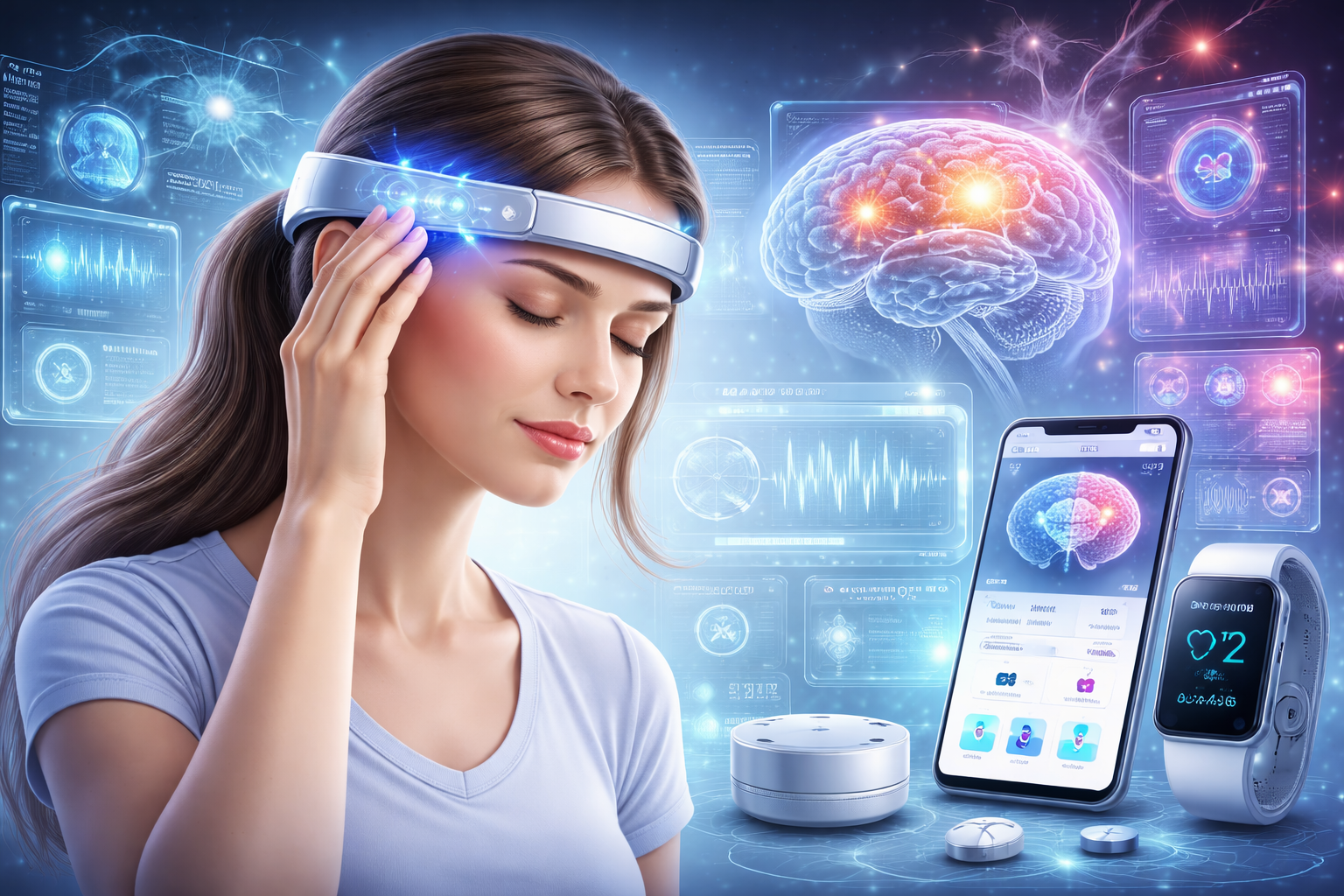
Living with migraines means facing unpredictable pain, triggers, and treatment responses. That’s why AI migraine care is so exciting. Artificial intelligence can analyze sleep patterns, stress levels, and more to help you stay ahead of attacks.
In this post, we’ll explore how AI-driven tools transform migraine diagnosis, management, and research.
Why We Need AI in Migraine Care
Migraine is a complex disorder. Sleep, hormones, diet, stress, and environment all play a role. No two migraine journeys are the same.
Patients generate tons of data through diaries, apps, wearables, and medical records. It’s tough for doctors to spot hidden patterns by memory alone.
AI migraine care steps in here. It scans all that data. It finds links between triggers and headache days. It learns individual patterns over time.
The result? Earlier warnings, better treatment choices, and less guesswork.
Current and Emerging AI Applications
1. Smart Digital Diaries
AI-powered apps now track symptoms along with weather, sleep, and activity. Instead of simply logging events, they tap machine learning to predict your next migraine.
2. Personalized Treatment Suggestions
Machine learning models sift through thousands of similar patient profiles. They identify which preventive or acute therapies work best for people like you.
Soon, AI platforms may suggest drugs based on your genes, lifestyle, and clinical history.
3. Faster, More Accurate Diagnosis
Distinguishing migraine from tension-type or cluster headaches can take years. AI tools analyze symptom patterns to help doctors diagnose sooner.
A recent study in Cephalalgia shows that AI algorithms reach diagnostic accuracy above 85%.
4. Accelerated Drug Discovery
Pharma companies use AI to screen new compounds and predict their efficacy in migraine models. AI also speeds up data analysis from large clinical trials. This means new treatments could arrive faster.
5. Wearables and Neuromodulation
Smart headbands, wrist devices, and sensors measure heart rate variability, skin temperature, and brain signals.
AI reads these signals in real time. Some devices can even trigger neuromodulation before a full migraine hits.
Benefits for Migraine Patients
1) Early Intervention
AI predictions let you take medication or use devices at the first sign of trouble. That often means milder pain and shorter attacks.
2) Less Trial and Error
Personalized insights reduce the need to cycle through multiple treatments. You spend less time on medications that don’t work.
3) Patient Empowerment
Apps and wearables put data at your fingertips. You see clear patterns in your own triggers and responses.
4) Better Access to Expertise
Telemedicine platforms with AI support can bring specialist-level guidance to remote or underserved areas.
Challenges and the Road Ahead
Privacy and Security
Health data is sensitive. Storing and sharing it safely must be a priority.
Accuracy and Data Quality
Garbage in, garbage out. Incomplete or inconsistent input harms AI predictions.
Equity and Access
The latest AI tools can be costly. Digital literacy also varies across populations.
Clinical Integration
Doctors need training to use AI insights without losing sight of patient-centered care.
Despite these hurdles, the outlook is bright. Hybrid care models will combine human expertise with AI insights.
Global research networks will pool data for faster discoveries. Precision medicine may one day match every patient with the exact therapy most likely to work.
Practical Tips to Get Started Today
1. Try a Smart Diary App
Look for migraine apps that use AI features to predict attacks. Enter your data consistently for best results.
2. Wear a Tracker
Simple devices that log sleep, heart rate, and activity can feed AI models and improve predictions.
3. Join a Clinical Trial
Ask your doctor if there are ongoing studies testing AI-based platforms. You may gain early access to cutting-edge tools.
4. Stay Realistic
AI is powerful, but it complements—not replaces—medical expertise. Use it as part of a collaborative care plan with your headache specialist.
5. Keep Learning
Read authoritative sources like NEJM or articles in JAMA to stay informed about the latest advances.
Take-Home Message
AI migraine care is transforming how we predict, prevent, and treat migraine attacks.
From smart diaries and personalized therapies to accelerated drug discovery and wearable sensors, the technology points to more precise, proactive, and patient-centered migraine management.
Embrace these tools today, and work closely with your healthcare team to make the most of AI’s potential.