
Tag: chronic migraine

  • Living with Chronic Migraine: Coping Strategies for Real Life

    Living with Chronic Migraine: Coping Strategies for Real Life

    Living with chronic migraine can feel like walking on a tightrope every day. You never know when the next attack will hit. Yet with the right coping plan, you can reduce disability, boost your mood, and reclaim control. In this guide, we explore proven strategies for living with chronic migraine and show how small changes add up to big wins.

    What Is Chronic Migraine?

    Chronic migraine means you experience headaches 15 or more days per month, with at least eight days featuring migraine symptoms, for at least three months. It affects 1–2% of people worldwide and often comes with nausea, light sensitivity, and throbbing pain. Medical treatments like Botox and CGRP antibodies are vital, but managing daily life also matters.

    Medical Strategies You Need

    Preventive therapies

    • Botox injections every 12 weeks
    • CGRP monoclonal antibodies (erenumab, fremanezumab)
    • Traditional preventives such as topiramate or beta-blockers

    Acute therapies

    • Triptans and NSAIDs for immediate relief
    • Gepants (ubrogepant) for targeted action
    • Anti-nausea meds to ease symptoms

    Multimodal approach

    Research published in Lancet shows combining medications with lifestyle shifts and non-drug therapies leads to better outcomes (external link: https://www.thelancet.com/journals/lancet/article/PIIS0140-6736(18)30988-9/fulltext).

    Building a Daily Routine

    1. Consistent Sleep and Meals

    Keep a sleep schedule and eat meals at the same times. Consistency helps stabilize your body clock and cut down headache triggers.

    2. Activity Pacing

    Alternate work or chores with short rest breaks. Use a timer or reminder app to keep your rest periods on track.

    3. Migraine Diary

    Track headache days, symptoms, and potential triggers in a notebook or app. This record helps you and your doctor make smarter treatment decisions.

    Managing Stress

    Stress often sparks migraine attacks. Use these techniques to break the stress-migraine cycle:

    • Cognitive-behavioral therapy (CBT) to reframe negative thoughts
    • Mindfulness meditation with guided audio sessions
    • Deep breathing and progressive muscle relaxation

    A 2021 NEJM study highlights that CBT can reduce migraine frequency by up to 30% (external link: https://www.nejm.org/doi/full/10.1056/NEJMoa2028718).

    Workplace and School Tips

    • Request accommodations like flexible hours or remote work.
    • Ask for a quiet workspace or noise-canceling headphones.
    • Share a simple info sheet on migraine to educate co-workers and teachers.

    Strengthening Social and Family Connections

    • Communicate openly about what you can and cannot do.
    • Plan social outings with built-in rest time.
    • Invite family members to a doctor visit so they better understand your needs.

    Building Resilience and Self-Advocacy

    Self-advocacy
    Speak up for the support you need at work and in healthcare. You know your body best.

    Education
    Understanding how migraine works can reduce guilt. It’s a neurological disorder, not weakness.

    Goal setting
    Set small, measurable targets—like reducing headache days by one per month. Celebrate those successes.

    Celebrating Progress
    Every step forward deserves recognition. Even one fewer headache day can improve your quality of life.

    Complementary Approaches

    • Regular gentle exercise, such as walking or yoga.
    • Supplements: magnesium, riboflavin, CoQ10 may prevent some attacks.
    • Non-drug options: acupuncture, biofeedback, or neuromodulation devices.

    Practical Tips for Every Patient

    • Plan ahead: Keep meds and comforting items at home, work, and in your bag.
    • Stay optimistic yet realistic: Migraine management is a marathon, not a sprint.
    • Avoid guilt: Cancelling plans during an attack is self-care, not failure.
    • Stay connected: Isolation worsens mood and pain.
    • Work with your doctor: Regular check-ins keep your plan on track.

    Takeaway

    Living with chronic migraine is demanding but not hopeless. By combining medical care with structured routines, stress management, and emotional support, you can reduce disability and regain control.

    Progress may be gradual, but each step forward counts. Stay persistent, stay informed, and lean on your support network. With patience and the right strategies, life with chronic migraine can become more manageable and fulfilling.


  • Botox for Chronic Migraine Prevention

    Botox for Chronic Migraine Prevention

    For people living with chronic migraine—defined as 15 or more headache days per month, with at least 8 migraine days—the burden can be profound. Work, family life, and mental health often suffer, and relying on acute medications alone is rarely enough.

    One of the most effective and well-studied preventive treatments for chronic migraine is onabotulinumtoxinA, better known by the brand name Botox. Unlike many older preventives, Botox is specifically approved for chronic migraine and has a strong evidence base supporting long-term use.

    How Botox Works in Migraine

    Botox is a purified neurotoxin derived from Clostridium botulinum. When injected in very small amounts into specific muscles of the head and neck, it does not work the same way as cosmetic Botox.

    In migraine prevention, Botox:

    • Blocks the release of pain-related neurotransmitters such as CGRP and substance P
    • Calms overactive pain pathways in the trigeminal nerve system
    • Reduces peripheral nerve sensitization, making migraine attacks less likely to start

    Rather than relaxing muscles alone, Botox primarily acts on pain signaling, helping prevent migraine before it escalates.

    Evidence for Effectiveness

    The strongest evidence for Botox comes from the landmark PREEMPT 1 and PREEMPT 2 trials, which established Botox as an effective preventive therapy for chronic migraine.

    These large randomized studies showed that Botox:

    • Reduced monthly headache days by an average of 8–9 days
    • Significantly improved quality-of-life and disability scores
    • Became more effective with repeated treatment cycles, highlighting the importance of consistency

    Results from these trials were published in leading journals such as Headache: The Journal of Head and Face Pain and Neurology.

    You can explore these findings further here:
    https://headachejournal.onlinelibrary.wiley.com
    https://www.neurology.org

    Real-world clinical experience has confirmed these results, with many patients reporting fewer, shorter, and less severe migraine attacks after several rounds of treatment.

    The Botox Procedure for Chronic Migraine

    Botox is administered every 12 weeks in a neurologist’s or headache specialist’s office.

    What to expect:

    • Injection pattern: Approximately 31 injections across the forehead, temples, scalp, back of the head, neck, and shoulders
    • Time required: About 10–15 minutes
    • Anesthesia: Not required; needles are very small and discomfort is brief

    Although the number of injections may sound intimidating, most patients tolerate the procedure well and describe it as manageable.

    Side Effects and Safety

    Botox is generally well tolerated, especially when administered by an experienced provider.

    Common side effects include:

    • Neck pain or stiffness
    • Local soreness at injection sites
    • Mild shoulder or neck weakness

    Less common:

    • Eyelid drooping (ptosis)
    • Temporary changes in neck posture

    These effects are usually mild and resolve within days to weeks. Serious side effects are rare when proper dosing and injection techniques are used.

    Importantly, Botox does not cause weight gain, sedation, or cognitive side effects, which makes it appealing for long-term use.

    Who Is a Candidate for Botox?

    Botox is approved only for chronic migraine, not episodic migraine.

    To qualify, patients typically must:

    • Have 15 or more headache days per month, with at least 8 migraine days, for at least 3 months
    • Have other causes of frequent headache ruled out
    • Have tried and failed at least two oral preventive medications, unless contraindicated or poorly tolerated

    Eligibility requirements may vary slightly depending on insurance or provincial coverage policies.

    How Soon Does Botox Start Working?

    Response timing varies:

    • Some patients notice improvement after the first treatment cycle
    • Most require 2–3 cycles (6–9 months) to fully assess benefit

    If no meaningful improvement is seen after three treatment cycles, Botox is usually discontinued and alternative options are explored.

    Access and Coverage in Canada

    Botox for chronic migraine is often covered in Canada, though approval usually requires documentation.

    Coverage pathways include:

    • Provincial drug programs, once eligibility criteria and prior authorization are met
    • Private insurance plans, with proof of chronic migraine diagnosis and preventive treatment failures
    • Hospital-based programs in some regions, where treatment costs may be partially or fully supported

    Neurologists and headache clinics are typically familiar with the approval process and required paperwork.

    Practical Tips for Patients

    • Keep a headache diary to document headache days and treatment response
    • Plan ahead, as injections are required every 12 weeks
    • Be patient, since benefits often build over multiple cycles
    • Report side effects, especially neck weakness or eyelid drooping
    • Combine Botox with lifestyle strategies, such as regular sleep, stress management, and trigger reduction

    Many patients also use Botox alongside other preventives, including CGRP monoclonal antibodies, when appropriate.

    Take-Home Message

    Botox is a proven, effective preventive treatment for chronic migraine. By calming pain pathways in the head and neck, it significantly reduces headache frequency, improves quality of life, and offers relief to patients whose migraines are otherwise difficult to control.

    Although it requires ongoing injections every three months, many people find the benefits far outweigh the inconvenience. For eligible patients with chronic migraine, Botox can be a transformative part of long-term migraine management.

  • CGRP Monoclonal Antibodies for Migraine Prevention: Aimovig, Ajovy, Emgality, and Vyepti

    CGRP Monoclonal Antibodies for Migraine Prevention: Aimovig, Ajovy, Emgality, and Vyepti

    One of the most important breakthroughs in modern migraine care has been the development of CGRP monoclonal antibodies (mAbs). These medications are the first treatments created specifically to prevent migraine, rather than being adapted from drugs used for other conditions.

    For people who have struggled with older preventives due to side effects or limited benefit, CGRP monoclonal antibodies offer a highly effective, well-tolerated, and targeted option. For many patients, they represent a turning point in migraine control.

    What Is CGRP and Why Does It Matter in Migraine?

    CGRP stands for calcitonin gene-related peptide, a neuropeptide that plays a central role in migraine biology. During a migraine attack, CGRP is released from nerve endings in the brain and surrounding tissues.

    CGRP contributes to migraine by:

    • Dilating blood vessels in the brain
    • Increasing inflammation around pain-sensitive nerves
    • Amplifying and sustaining pain signals

    By blocking CGRP or its receptor, these medications interrupt the migraine process at a very early stage. This reduces the brain’s sensitivity to triggers and lowers the likelihood that a migraine attack will start.

    The Available CGRP Monoclonal Antibodies

    There are currently four CGRP monoclonal antibodies approved for migraine prevention.

    • Aimovig (erenumab): Blocks the CGRP receptor
    • Ajovy (fremanezumab): Binds directly to the CGRP molecule
    • Emgality (galcanezumab): Binds directly to the CGRP molecule
    • Vyepti (eptinezumab): Binds CGRP and is given intravenously every three months

    All four are highly specific. They act almost exclusively on the migraine pathway, which explains their favorable side-effect profile compared with many older preventive medications.

    Evidence for Effectiveness

    Clinical trials and real-world studies consistently show strong benefits from CGRP monoclonal antibodies.

    Key findings include:

    • An average reduction of 4–8 monthly migraine days
    • About 50% of patients achieve at least a 50% reduction in migraine frequency
    • A subset of patients experience near-complete remission
    • Benefits often begin within the first month, with continued improvement over time

    Importantly, these results are seen in both episodic and chronic migraine, including patients who have failed multiple traditional preventive therapies.

    How CGRP Monoclonal Antibodies Are Given

    The method and frequency of dosing varies slightly between medications.

    • Aimovig, Ajovy, and Emgality are given as subcutaneous injections
      • Usually once monthly
      • Ajovy also offers a quarterly dosing option
    • Vyepti is given as an intravenous infusion every three months, administered in a clinic

    Most patients who use injections are able to self-administer at home after brief training, using prefilled pens or syringes.

    Side Effects and Safety

    CGRP monoclonal antibodies are generally very well tolerated. The most commonly reported side effects include:

    • Injection site reactions such as redness, swelling, or itching
    • Constipation, particularly with erenumab (Aimovig)
    • Rare allergic reactions

    Unlike many older migraine preventives, CGRP mAbs:

    • Do not cause sedation
    • Do not cause weight gain
    • Do not cause cognitive or memory problems

    They are also considered safe for most patients with cardiovascular disease, as they do not constrict blood vessels. Long-term safety data is reassuring, with many patients using these treatments for years without significant issues.

    Who Should Consider CGRP Monoclonal Antibodies?

    CGRP monoclonal antibodies may be especially helpful for:

    • People with frequent or chronic migraine
    • Patients who have tried and failed two or more traditional preventive medications
    • Those who cannot tolerate side effects from oral preventives
    • Patients who prefer once-monthly or quarterly dosing over daily pills

    Many insurance plans require documentation of prior preventive failures before approving coverage.

    Access and Coverage in Canada

    Cost remains one of the main barriers to CGRP monoclonal antibodies. These medications can cost hundreds of dollars per month without coverage.

    In Canada:

    • Most private insurance plans cover CGRP mAbs with prior authorization
    • Some provincial programs provide coverage for patients who meet strict criteria, such as chronic migraine and multiple preventive failures
    • Manufacturer patient support programs often assist with coverage navigation, training, and co-pay support

    Working closely with a healthcare provider helps streamline the approval process.

    Practical Tips for Patients Using CGRP Monoclonal Antibodies

    • Expect gradual improvement: Some benefit may appear quickly, but give treatment 3–6 months before judging success
    • Track headache days: Headache diaries help document response and support insurance renewals
    • Store properly: Most injections require refrigeration, with limited room-temperature allowance before use
    • Rotate injection sites to reduce irritation
    • Maintain follow-up appointments to reassess dosing, effectiveness, and access

    Lifestyle measures such as regular sleep, hydration, and stress management continue to support medication effectiveness.

    Take-Home Message

    CGRP monoclonal antibodies represent a major advance in migraine prevention. By directly targeting the biology of migraine, they provide effective, well-tolerated, and convenient options for people who have struggled with traditional therapies.

    Although cost and access can be challenges, for eligible patients these treatments can be life-changing—reducing migraine frequency, improving daily function, and restoring a sense of control over life with migraine.

  • Beta-Blockers (Propranolol & Metoprolol) for Migraine Prevention: A Complete Guide

    Beta-Blockers (Propranolol & Metoprolol) for Migraine Prevention: A Complete Guide

    Beta-blockers are some of the most reliable and time-tested tools we have for migraine prevention. Although they were originally developed to treat high blood pressure and heart conditions, certain beta-blockers—especially propranolol and metoprolol—have decades of strong clinical evidence supporting their use in reducing migraine frequency and severity. For many people, they remain a trusted first-line preventive option.

    In this guide, we’ll break down how beta-blockers work, who benefits most, how they’re taken, and what to expect along the way.

    How Beta-Blockers Work for Migraine Prevention

    The exact way beta-blockers help prevent migraine isn’t fully understood, and researchers are still piecing together the full picture. What we do know is that their migraine benefits extend far beyond simply lowering blood pressure.

    Here are the leading theories:

    1. Stabilizing Blood Vessels

    Beta-blockers may help prevent abnormal dilation of blood vessels in the brain—a common contributor to migraine pain.

    2. Modulating Brain Neurotransmitters

    They may reduce excitatory signals in the brain, helping calm the neural pathways that become overactive during attacks.

    3. Dampening Stress Responses

    By lowering activity in the sympathetic nervous system, beta-blockers may reduce vulnerability to attacks triggered by stress or overstimulation.

    4. Improving Brain Excitability Control

    Research discussed in journals like Headache suggests that beta-blockers may support more stable neuronal firing, making the brain less prone to migraine “storms” and sensory overload.

    Which Beta-Blockers Are Used for Migraine?

    Not all beta-blockers work equally well for migraine prevention. The two with the strongest evidence—and the ones most often recommended in clinical guidelines—are:

    • Propranolol (Inderal)
      A long-standing top choice with decades of high-quality research behind it.
    • Metoprolol (Lopressor, Toprol-XL)
      Another well-studied and widely prescribed option, especially in extended-release form.

    Other beta-blockers sometimes used include:

    • Nadolol
    • Timolol
    • Atenolol
    • Bisoprolol

    While these may help some patients, their evidence base is not as strong as propranolol and metoprolol.

    If you’re unsure which option is best for you, your doctor will typically choose based on your health history, side-effect profile, and any coexisting conditions like high blood pressure or anxiety.

    What the Research Shows

    Studies published in Cephalalgia and other leading neurology journals show consistent benefits:

    • Propranolol and metoprolol typically reduce migraine attacks by about 2–3 per month compared to placebo.
    • Around 50–60% of patients achieve at least a 50% reduction in migraine frequency.
    • Benefits generally build over 6–8 weeks and continue improving with steady use.

    Because of these results, guideline groups frequently rank propranolol and metoprolol among the most evidence-backed preventive medications.

    How Beta-Blockers Are Taken

    Although every treatment plan is individualized, here’s what typical dosing looks like:

    Propranolol

    • Often started at 20–40 mg twice daily
    • Can be slowly increased
    • Some people require up to 160–240 mg per day
    • Available in long-acting formulations for once-daily use

    Metoprolol

    • Usually started at 50 mg daily
    • Dose increased gradually if needed
    • Extended-release forms can improve convenience and reduce side effects

    Beta-blockers must be taken daily, not just during attacks. Their effect builds gradually as they help stabilize brain and vascular activity over time.

    Possible Side Effects

    Beta-blockers are generally well tolerated, but some people may notice:

    • Fatigue or reduced exercise tolerance
    • Cold hands or feet
    • Lightheadedness
    • Sleep disturbances or vivid dreams (more common with propranolol)
    • Sexual side effects in some men

    Most side effects improve as your body adjusts or with a dose change. Always discuss new or uncomfortable symptoms with your clinician.

    Who Should Avoid Beta-Blockers?

    Some people should avoid or use beta-blockers cautiously, including those with:

    • Asthma or severe lung disease
    • Very low blood pressure
    • Slow heart rate
    • Certain heart rhythm problems
    • Severe depressive symptoms (evidence is mixed but often discussed clinically)

    If you have any of these conditions, your clinician will help determine whether a different migraine preventive might be safer.

    Special Considerations

    Exercise & Athletes

    Beta-blockers may blunt your heart rate response to exercise, making workouts feel harder.

    Pregnancy

    Propranolol is sometimes used during pregnancy, but risks and benefits must be reviewed carefully with an obstetric clinician.

    Other Conditions

    If you have hypertension, tremor, or anxiety, beta-blockers can offer additional benefits beyond migraine control.

    Practical Tips for Getting Started

    Here’s what helps most people succeed with beta-blocker prevention:

    • Start low and go slow to minimize side effects.
    • Track your progress with a simple migraine diary or app.
    • Allow 6–8 weeks to see meaningful improvement.
    • Never stop suddenly—tapering is important to avoid rebound symptoms.
    • Discuss your full medical picture with your clinician, especially if you have anxiety or high blood pressure.

    Takeaway

    Propranolol and metoprolol remain two of the most trusted, well-researched options for migraine prevention. They can significantly reduce attack frequency, improve daily functioning, and provide long-term stability for many people living with migraine. While they’re not suitable for everyone—especially those with asthma or certain heart conditions—they offer an affordable and effective starting place for many patients.

  • When to Consider Preventive Therapy for Migraine

    When to Consider Preventive Therapy for Migraine

    For many people living with migraine, acute medications like NSAIDs, triptans, or gepants work well enough to manage occasional attacks. But when migraines start happening more often—or become so disabling that treating attacks one by one no longer feels sustainable—it may be time to consider a different approach. This is where preventive therapy for migraine comes in.

    Preventive treatments help reduce how often migraine strikes, how severe attacks feel, and how much they interrupt daily life. Knowing when to shift from “treating as needed” to “preventing regularly” can be a turning point in long-term migraine control.

    What Is Preventive Therapy?

    Preventive therapy involves taking medications or using treatments on a regular schedule—not just during an attack—to reduce the overall burden of migraine. These therapies help by:

    • Lowering the total number of headache days per month
    • Reducing the severity of individual attacks
    • Making acute medications more effective
    • Improving daily functioning and quality of life

    Preventives don’t stop a migraine once it begins. Instead, they gradually change the brain’s baseline state, making attacks less frequent and less disruptive over time.

    When to Consider Preventive Therapy for Migraine

    Guidelines and clinical experience point to several situations when preventive therapy becomes a smart, proactive choice.

    1. High Attack Frequency

    You may benefit from prevention if you experience:

    • More than 4–5 migraine days per month
    • Chronic migraine (15 or more headache days per month, with at least 8 that meet migraine criteria)

    Frequent attacks often lead to reduced productivity, missed events, emotional stress, and increased risk of medication overuse.

    2. Severe Disability

    Even if migraine attacks are infrequent, prevention may be appropriate when:

    • Migraine significantly disrupts work, school, parenting, or social activities
    • Recovery time after each attack is long or unpredictable

    A single disabling migraine can have consequences that ripple through an entire week.

    3. Poor Response to Acute Medications

    Consider prevention if:

    • Your acute medications don’t work consistently
    • Side effects limit what you can take
    • Attacks escalate too quickly to treat effectively

    Preventive therapy can help stabilize your migraine pattern so acute medications work better when you need them.

    4. Medication Overuse or Risk of Overuse

    Using acute medications too frequently—especially for several months—can lead to medication overuse headache. Prevention lowers the need for frequent acute dosing and reduces the risk of this cycle developing.

    5. Patient Preference

    Some people with fewer migraine days still choose preventive therapy because:

    • Their attacks are highly disabling
    • Migraine triggers are unpredictable
    • They prefer a stable, long-term strategy over frequent medication use

    Personal goals matter just as much as clinical thresholds.

    Types of Preventive Migraine Treatments

    There is no single “best” preventive therapy—options are flexible and can be tailored to your needs, medical history, and preferences.

    Oral Medications

    Common first-line preventives include:

    • Antiepileptics: topiramate
    • Beta-blockers: propranolol, metoprolol
    • Antidepressants: amitriptyline, venlafaxine
    • Blood pressure medications: candesartan

    These are widely available and often effective, though they may require dose adjustments over time.

    Injectable Preventive Therapies

    • CGRP monoclonal antibodies (erenumab, fremanezumab, galcanezumab, eptinezumab)
    • Botox (onabotulinumtoxinA) for chronic migraine

    These options are designed specifically for migraine or chronic headache disorders and are often well tolerated.

    Nutraceuticals

    • Magnesium
    • Riboflavin (vitamin B2)
    • Coenzyme Q10

    These are commonly used as part of a layered prevention plan.

    Non-Medication Options

    • Neuromodulation devices
    • Behavioral therapies such as CBT
    • Lifestyle changes like improved sleep, consistent meals, exercise, and stress reduction

    How Effective Are Preventives?

    Preventive therapies don’t eliminate migraine entirely, but they can significantly reduce its impact.

    • Topiramate often lowers monthly headache days by 2–3.
    • Beta-blockers help improve migraine frequency in roughly 60% of patients.
    • CGRP monoclonal antibodies can reduce monthly migraine days by 4–8 or more in clinical trials.

    Around half of patients experience a 50% or greater reduction in migraine frequency with a well-matched preventive.

    How Long Do Preventives Take to Work?

    Preventive therapy requires patience. Most treatments take:

    • 6–12 weeks to start showing benefits
    • At least 3 months for a full assessment of effectiveness

    Some medications need gradual dose increases to minimize side effects, which can also extend the timeline before benefits are fully felt.

    Balancing Risks and Benefits

    Every preventive medication comes with potential side effects:

    • Topiramate: tingling, cognitive slowing, weight loss
    • Beta-blockers: fatigue, low heart rate, dizziness
    • Antidepressants: sedation, dry mouth, weight changes
    • CGRP antibodies: constipation, injection site reactions
    • Botox: neck pain, temporary muscle weakness

    The key is finding a preventive that provides meaningful improvement with manageable side effects.

    Practical Steps for Patients Considering Prevention

    • Track your attacks: Record frequency, duration, severity, and triggers.
    • Discuss disability openly: Explain how migraine affects your daily life.
    • Explore your options: Ask about oral medications, injectables, and non-drug therapies.
    • Give each treatment a fair trial: Don’t judge effectiveness too early.
    • Combine with lifestyle support: Good sleep, hydration, stress management, and regular movement can enhance results.

    Take-Home Message

    Preventive therapy for migraine becomes an important option when attacks are frequent, disabling, difficult to treat, or leading to medication overuse. With choices ranging from oral medications and injectables to nutraceuticals and neuromodulation, most people can find a preventive that fits their needs. With the right plan—and a little patience—prevention can transform migraine from a constant burden into a more manageable, predictable part of life.

  • What Is Migraine? Symptoms, Types, and Diagnosis

    What Is Migraine? Symptoms, Types, and Diagnosis

    Photo by Liza Summer

    Migraine is a common yet often misunderstood neurological disorder that affects millions worldwide. It’s far more than “just a headache.” Migraine involves complex interactions between the brain, nerves, and blood vessels, leading to a wide range of symptoms that can disrupt daily life. An estimated 12% of the global population experiences migraine, making it one of the most disabling neurological conditions according to the World Health Organization (WHO).

    Understanding what migraine is, how it presents, and how it’s diagnosed is the first step toward effective management and better quality of life.

    What Is a Migraine?

    A migraine is a recurrent headache disorder characterized by moderate to severe pain that typically lasts between 4 and 72 hours if left untreated. Unlike tension-type headaches, migraine pain is often one-sided, throbbing, and worsened by physical activity.

    Other common symptoms include:

    • Nausea and vomiting
    • Sensitivity to light (photophobia)
    • Sensitivity to sound (phonophobia)
    • Sometimes, sensitivity to smells or touch

    Doctors diagnose migraine based on the International Classification of Headache Disorders, 3rd edition (ICHD-3) criteria. A diagnosis usually requires:

    • At least one associated symptom such as nausea/vomiting or sensitivity to light and sound
    • At least five headache attacks meeting migraine features
    • Duration of 4–72 hours per attack
    • At least two of the following: one-sided pain, pulsating quality, moderate-to-severe intensity, or aggravation with movement

    Types of Migraine: With Aura and Without Aura

    Migraines are generally categorized into two main types:

    1. Migraine Without Aura

    This is the most frequent form, affecting about 70–75% of people with migraine. Symptoms include head pain and associated sensitivities—but no neurological warning signs before the attack.

    2. Migraine With Aura

    Roughly 25–30% of migraine patients experience an aura, which consists of temporary neurological symptoms that typically develop over 5–20 minutes and last less than an hour.

    Common aura symptoms include:

    • Visual disturbances (flashing lights, zigzag lines, or blind spots)
    • Sensory changes (tingling, numbness)
    • Speech or language difficulties
    • Temporary weakness on one side of the body (in rare cases)

    Some people experience aura without the headache phase, a condition known as “acephalgic migraine.”

    Other Types and Variants of Migraine

    Beyond the classic categories, several migraine subtypes exist:

    • Chronic migraine: 15 or more headache days per month for at least 3 months, with at least 8 showing migraine features.
    • Vestibular migraine: Involves dizziness or vertigo rather than prominent head pain.
    • Hemiplegic migraine: Rare, includes temporary weakness or paralysis on one side of the body.
    • Menstrual migraine: Triggered or worsened by hormonal fluctuations during the menstrual cycle.

    Each variant presents unique challenges and may require a tailored treatment approach.

    Migraine Symptoms Beyond Headache

    Migraine is best understood as a multi-phase neurological event, not just a headache. Symptoms can span several stages:

    1. Prodrome (Early Warning Signs)

    Occurs hours or days before pain starts. Symptoms may include:

    • Fatigue or mood changes
    • Neck stiffness
    • Food cravings
    • Yawning or irritability

    2. Headache Phase

    This is the hallmark migraine pain—often throbbing, one-sided, and worsened by activity. Nausea, vomiting, and sensory sensitivity are common.

    3. Postdrome (Migraine “Hangover”)

    After pain resolves, many patients feel drained, fatigued, or mentally foggy for up to 48 hours.

    Understanding these stages helps patients recognize patterns and seek treatment early, potentially preventing full-blown attacks.

    How Is Migraine Diagnosed?

    There’s no single test (like a blood test or scan) that definitively diagnoses migraine. Instead, the diagnosis is clinical, based on a thorough history and examination.

    Key Diagnostic Steps:

    • Detailed history: Describing attack frequency, duration, symptoms, and potential triggers.
    • Headache diary: Tracking attacks helps identify patterns and triggers.
    • Physical and neurological exam: Usually normal, but essential to rule out other conditions.
    • Imaging (MRI or CT): Ordered only if there are “red flags,” such as a sudden severe headache, neurological symptoms, or changes in headache pattern.

    According to the American Headache Society, early diagnosis is crucial because untreated migraine can progress to chronic migraine or lead to medication-overuse headaches.

    Further research in The Lancet Neurology has also shown that early recognition and preventive strategies can significantly reduce the burden of migraine on daily life.

    Why an Accurate Diagnosis Matters

    Many people live for years with undiagnosed or misdiagnosed migraine, often mistaking their symptoms for “sinus headaches” or stress-related pain. A correct diagnosis:

    • Confirms that symptoms are due to migraine
    • Enables access to evidence-based treatments
    • Helps prevent unnecessary tests or medications
    • Improves long-term outcomes and quality of life

    A review in Cephalalgia: The Journal of Headache and Face Pain emphasizes that proper migraine classification and early treatment improve outcomes and reduce progression to chronic migraine.

    To learn more about migraine triggers or migraine treatment options, explore our related articles for practical guidance.

    Practical Steps for Patients

    If you suspect migraine, here are steps to take:

    1. Track your symptoms: Keep a headache diary or use a migraine-tracking app.
    2. Identify triggers: Note sleep patterns, diet, stress levels, and hormonal cycles.
    3. Consult your doctor: Share your symptom history and diary to guide diagnosis.
    4. Watch for red flags: Seek immediate care for a sudden, severe headache, new neurological symptoms, or a change in pattern.

    The Takeaway

    Migraine is a complex neurological condition that extends well beyond a typical headache. Recognizing the full spectrum of symptoms, understanding the difference between migraine with and without aura, and pursuing proper diagnosis are critical first steps.

    With the right diagnosis and management plan, most patients can significantly reduce attack frequency, improve daily function, and regain control of their lives.

  • Chronic vs Episodic Migraine: What It Means for Your Treatment

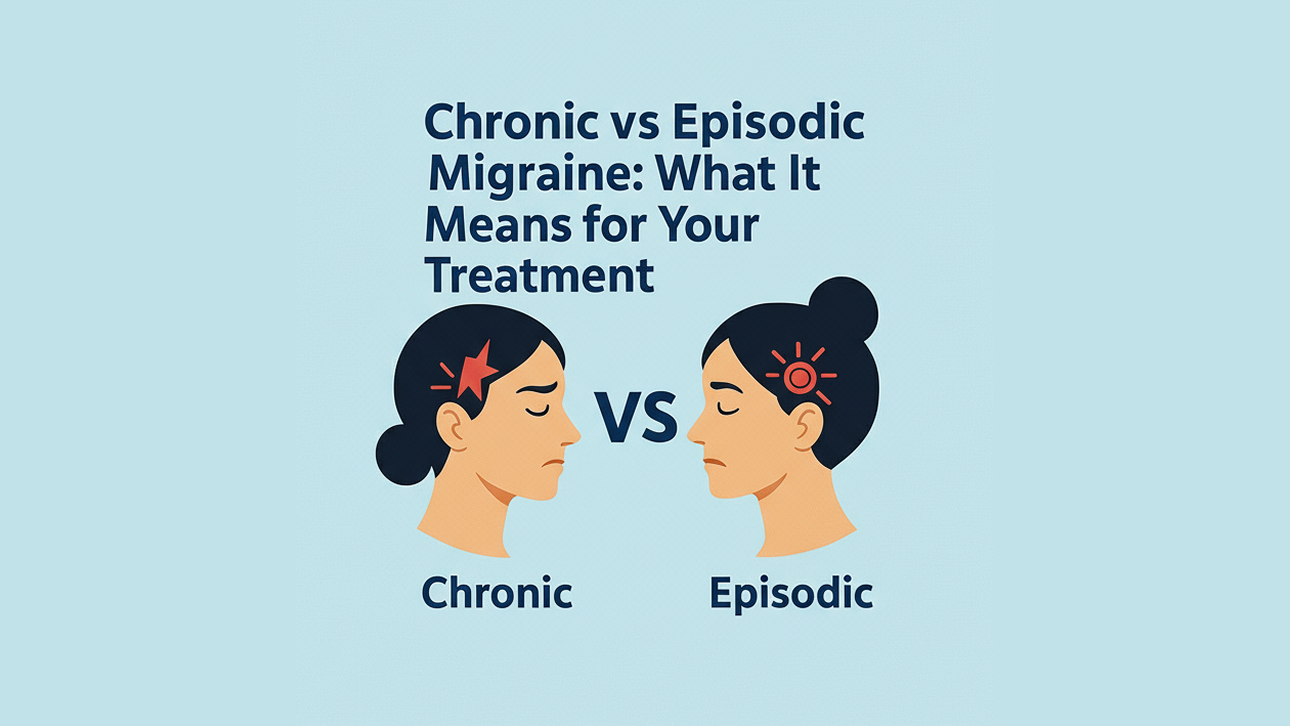
    Chronic vs Episodic Migraine: What It Means for Your Treatment

    Understanding Chronic vs Episodic Migraine

    If you live with migraine, the words “chronic” and “episodic” aren’t just labels—they shape your treatment plan and even your insurance coverage. Understanding chronic vs episodic migraine helps you make informed choices and work with your doctor to find the most effective therapies.

    Definitions

    Doctors classify migraine based on how many days per month you experience headaches:

    • Episodic migraine: Fewer than 15 headache days per month.
    • Chronic migraine: 15 or more headache days per month, with at least 8 that meet migraine criteria.

    This distinction might sound small, but it can significantly affect what treatments you can access and how your healthcare team manages your condition.

    Why the Difference Matters

    Your migraine classification can determine whether certain treatments are covered or prescribed.

    • Botox is FDA-approved only for chronic migraine, not episodic migraine.
    • CGRP monoclonal antibodies (like Aimovig, Emgality, or Ajovy) and gepants (such as Nurtec or Ubrelvy) may also depend on your classification for insurance coverage.

    That’s why it’s crucial to track your headache days accurately—a small difference in your count can change your treatment eligibility.

    What You Can Do

    Before your next appointment, try keeping a headache diary or using a migraine tracking app for at least one to two months. Note each headache’s severity, duration, and migraine-like features (such as nausea, light sensitivity, or aura).

    • If your total headache days are close to the cutoff (14–16 days), it’s especially important to bring this record to your doctor.
    • If your headaches improve with treatment and drop into the episodic range, your doctor may adjust your plan—but you’ll likely still follow chronic migraine guidelines until improvement is stable for several months.

    🩺 For detailed advice on tracking and diagnosis, visit the National Headache Foundation or speak with your healthcare provider.

    When to Talk to Your Doctor About Chronic vs Episodic Migraine

    You should discuss classification and treatment with your doctor if:

    • You’re close to the 15-day cutoff each month.
    • Your headache pattern has changed recently.
    • You’re considering preventive therapy or notice medication overuse.

    Understanding whether you have chronic vs episodic migraine empowers you to make evidence-based decisions about your care.

    Final Thoughts

    Your migraine label isn’t just a medical term—it’s a roadmap to better management. By tracking your symptoms and partnering with your doctor, you can access more targeted treatments, reduce attack frequency, and improve your quality of life.Disclaimer