


For many women, migraine is deeply connected to hormonal change. From the first menstrual cycle through pregnancy and into midlife, shifting estrogen levels can influence how often attacks occur and how severe they feel. The menopausal transition is one of the most significant phases in this journey.
Some women notice that migraine slowly fades away after menopause. Others experience a frustrating worsening during the years leading up to it. Knowing what’s happening in your body—and how to respond—can make this transition far less overwhelming.
This guide explains how menopause affects migraine, how to tell migraine apart from other midlife headaches, and which treatment options are safest and most effective during this stage of life.
How Menopause Affects Migraine
Menopause is not a single moment in time. It is a process that unfolds over several years, and migraine behaves differently at each stage.
Perimenopause: When Migraine Often Worsens
Perimenopause refers to the transition years before periods stop completely. During this time, estrogen levels fluctuate dramatically rather than declining in a smooth, predictable way. These hormonal swings are a powerful migraine trigger.
Many women notice that attacks become:
- More frequent
- Longer-lasting
- Harder to treat with usual medications
- Less predictable in timing
Migraine that was once tied closely to the menstrual cycle may lose its clear pattern. For some, new symptoms such as dizziness, brain fog, or worsening nausea appear for the first time.
Research published in Headache: The Journal of Head and Face Pain shows that perimenopause is one of the highest-risk periods for migraine chronification, especially in women with a long migraine history.
Postmenopause: Why Many Women Improve
After menopause—defined as 12 consecutive months without a period—estrogen levels stabilize at a consistently low level. Without constant hormonal ups and downs, migraine often improves.
Many women experience:
- Fewer attacks
- Lower pain intensity
- Better response to acute treatments
However, improvement is not guaranteed. Women with long-standing chronic migraine or migraine with aura may continue to have symptoms, although attacks are often less severe than during perimenopause.
Migraine With Aura in Menopause
Migraine with aura behaves differently from migraine without aura. Visual disturbances, numbness, or speech changes may persist into menopause even when headache pain improves. Studies in Neurology Journal suggest that aura symptoms are less hormone-sensitive and therefore less likely to resolve completely after menopause.
Distinguishing Migraine From Other Midlife Headaches
Midlife is also a time when new headache types can appear. Not every headache during menopause is migraine, and it’s important to recognize red flags.
Common non-migraine headaches include:
- Tension-type headaches, often related to stress, posture, or jaw clenching
- Cervicogenic headaches, caused by arthritis or muscle tension in the neck
- Secondary headaches, linked to conditions such as high blood pressure, sleep apnea, or medication side effects
Any new, severe, or unusual headache—especially one that wakes you from sleep or comes with neurological symptoms—should be evaluated by a healthcare provider. This is particularly important after age 40.
Treatment Approaches for Migraine in Menopause
Migraine treatments used earlier in life remain effective during menopause, but they often need adjustment to reflect changing health risks and priorities.
Non-Drug Strategies That Matter More Than Ever
Lifestyle consistency becomes especially important during perimenopause. Small disruptions can trigger big migraine responses.
Helpful strategies include:
- Keeping regular sleep and wake times, even on weekends
- Eating meals at consistent times to avoid blood sugar swings
- Staying well hydrated
- Managing hot flashes and night sweats with a cooler bedroom and breathable fabrics
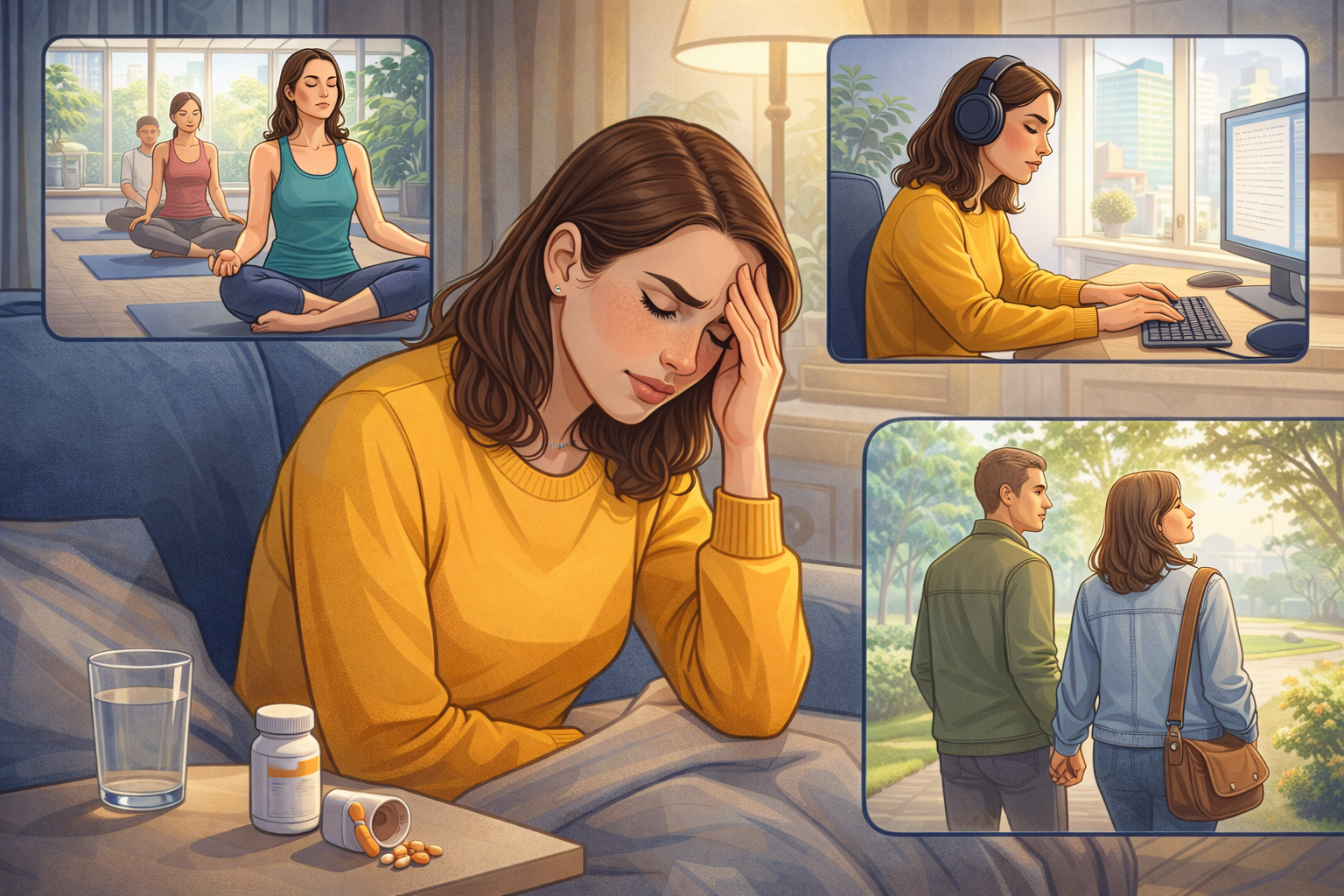
- Using stress-reduction techniques such as yoga, mindfulness, or cognitive-behavioral therapy
Clinical trials published in The Lancet highlight that behavioral interventions significantly improve migraine outcomes in midlife women when combined with medication.
Acute Migraine Treatments
Acute treatments stop an attack once it starts. Choice depends on cardiovascular risk, other medical conditions, and how migraine presents.
Common options include:
- Triptans, which remain first-line for many women without vascular risk factors
- NSAIDs such as ibuprofen or naproxen, used cautiously due to stomach, kidney, and heart risks with long-term use
- Gepants like rimegepant or ubrogepant, which do not constrict blood vessels and are ideal for women with cardiovascular concerns
- Antiemetics such as metoclopramide or ondansetron when nausea is prominent
According to reviews in JAMA, gepants have expanded safe treatment options for older migraine patients and those with complex medical histories.
Preventive Migraine Treatments
Preventive therapy is recommended if migraine occurs frequently or significantly interferes with daily life.
Effective options during menopause include:
- Blood pressure medications such as beta-blockers or candesartan
- Certain antidepressants that also help with sleep or mood symptoms
- CGRP monoclonal antibodies and preventive gepants, which have favorable safety profiles
- Topiramate, used carefully due to cognitive side effects that may feel more noticeable in midlife
Large trials reported in The New England Journal of Medicine confirm that CGRP-targeted therapies remain effective and well tolerated in postmenopausal women.
Hormone Replacement Therapy (HRT) and Migraine
Hormone replacement therapy is often prescribed to relieve hot flashes, night sweats, and sleep disruption. Its effect on migraine depends heavily on the type and delivery method.
When HRT May Help Migraine
Stable estrogen delivery is key. Low-dose estrogen patches, gels, or vaginal preparations provide steady hormone levels and may reduce migraine frequency by avoiding sudden drops.
Some women notice fewer attacks and improved sleep when menopausal symptoms are controlled.
When HRT May Worsen Migraine
Oral estrogen pills can cause fluctuating hormone levels, which may trigger or worsen migraine. Progesterone-containing therapies may also affect headache patterns, sometimes negatively.
For women with migraine with aura, extra caution is required. Both aura and estrogen increase stroke risk. Many experts recommend non-estrogen options for managing menopausal symptoms in this group.
Special Considerations in Midlife Migraine Care
Menopause often coincides with other health changes that influence migraine management.
Bone and Heart Health
Some preventive medications may affect bone density or blood pressure. Monitoring becomes more important after menopause, especially for women with osteoporosis risk.
Polypharmacy
Many women take medications for cholesterol, blood pressure, or diabetes by midlife. Drug interactions should be reviewed regularly to avoid reduced effectiveness or side effects.
Mental Health
Anxiety, depression, and sleep disorders commonly fluctuate during perimenopause. Treating mood symptoms alongside migraine consistently leads to better outcomes.
Practical Tips for Patients
- Track patterns with a headache diary to understand how migraine evolves through menopause
- Review medications regularly, especially if new health conditions develop
- Discuss HRT carefully, focusing on delivery method and migraine type
- Prioritize overall health with regular exercise, balanced nutrition, and sleep
- Stay proactive, even if migraine improves after menopause
Take-Home Message
Menopause can be a turning point in the migraine journey. For many women, attacks worsen temporarily during perimenopause due to hormonal instability, but improvement often follows once hormones stabilize after menopause. Migraine treatments remain effective and safe when chosen thoughtfully, even in the presence of other midlife health concerns.
With the right combination of lifestyle strategies, acute medications, preventive therapies, and careful consideration of hormone treatment, women can navigate menopause with confidence and look forward to better migraine control.




Leave a Reply