

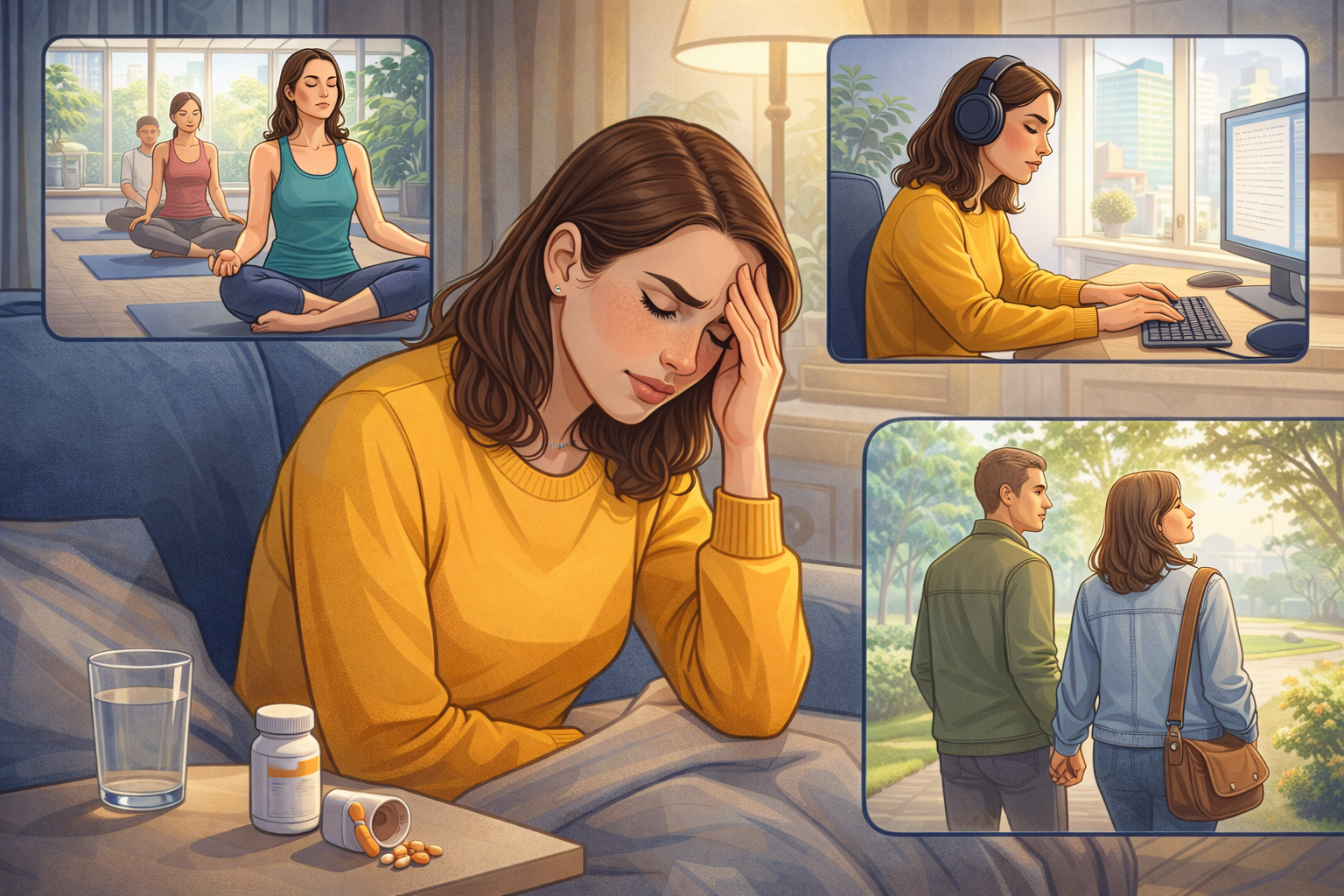
Living with chronic migraine can feel like walking on a tightrope every day. You never know when the next attack will hit. Yet with the right coping plan, you can reduce disability, boost your mood, and reclaim control. In this guide, we explore proven strategies for living with chronic migraine and show how small changes add up to big wins.
What Is Chronic Migraine?
Chronic migraine means you experience headaches 15 or more days per month, with at least eight days featuring migraine symptoms, for at least three months. It affects 1–2% of people worldwide and often comes with nausea, light sensitivity, and throbbing pain. Medical treatments like Botox and CGRP antibodies are vital, but managing daily life also matters.
Medical Strategies You Need
Preventive therapies
• Botox injections every 12 weeks
• CGRP monoclonal antibodies (erenumab, fremanezumab)
• Traditional preventives such as topiramate or beta-blockers
Acute therapies
• Triptans and NSAIDs for immediate relief
• Gepants (ubrogepant) for targeted action
• Anti-nausea meds to ease symptoms
Multimodal approach
Research published in Lancet shows combining medications with lifestyle shifts and non-drug therapies leads to better outcomes (external link: https://www.thelancet.com/journals/lancet/article/PIIS0140-6736(18)30988-9/fulltext).
Building a Daily Routine
1. Consistent Sleep and Meals
Keep a sleep schedule and eat meals at the same times. Consistency helps stabilize your body clock and cut down headache triggers.
2. Activity Pacing
Alternate work or chores with short rest breaks. Use a timer or reminder app to keep your rest periods on track.
3. Migraine Diary
Track headache days, symptoms, and potential triggers in a notebook or app. This record helps you and your doctor make smarter treatment decisions.
Managing Stress
Stress often sparks migraine attacks. Use these techniques to break the stress-migraine cycle:
• Cognitive-behavioral therapy (CBT) to reframe negative thoughts
• Mindfulness meditation with guided audio sessions
• Deep breathing and progressive muscle relaxation
A 2021 NEJM study highlights that CBT can reduce migraine frequency by up to 30% (external link: https://www.nejm.org/doi/full/10.1056/NEJMoa2028718).
Workplace and School Tips
• Request accommodations like flexible hours or remote work.
• Ask for a quiet workspace or noise-canceling headphones.
• Share a simple info sheet on migraine to educate co-workers and teachers.
Strengthening Social and Family Connections
• Communicate openly about what you can and cannot do.
• Plan social outings with built-in rest time.
• Invite family members to a doctor visit so they better understand your needs.
Building Resilience and Self-Advocacy
Self-advocacy
Speak up for the support you need at work and in healthcare. You know your body best.
Education
Understanding how migraine works can reduce guilt. It’s a neurological disorder, not weakness.
Goal setting
Set small, measurable targets—like reducing headache days by one per month. Celebrate those successes.
Celebrating Progress
Every step forward deserves recognition. Even one fewer headache day can improve your quality of life.
Complementary Approaches
• Regular gentle exercise, such as walking or yoga.
• Supplements: magnesium, riboflavin, CoQ10 may prevent some attacks.
• Non-drug options: acupuncture, biofeedback, or neuromodulation devices.
Practical Tips for Every Patient
• Plan ahead: Keep meds and comforting items at home, work, and in your bag.
• Stay optimistic yet realistic: Migraine management is a marathon, not a sprint.
• Avoid guilt: Cancelling plans during an attack is self-care, not failure.
• Stay connected: Isolation worsens mood and pain.
• Work with your doctor: Regular check-ins keep your plan on track.
Takeaway
Living with chronic migraine is demanding but not hopeless. By combining medical care with structured routines, stress management, and emotional support, you can reduce disability and regain control.
Progress may be gradual, but each step forward counts. Stay persistent, stay informed, and lean on your support network. With patience and the right strategies, life with chronic migraine can become more manageable and fulfilling.




Leave a Reply