

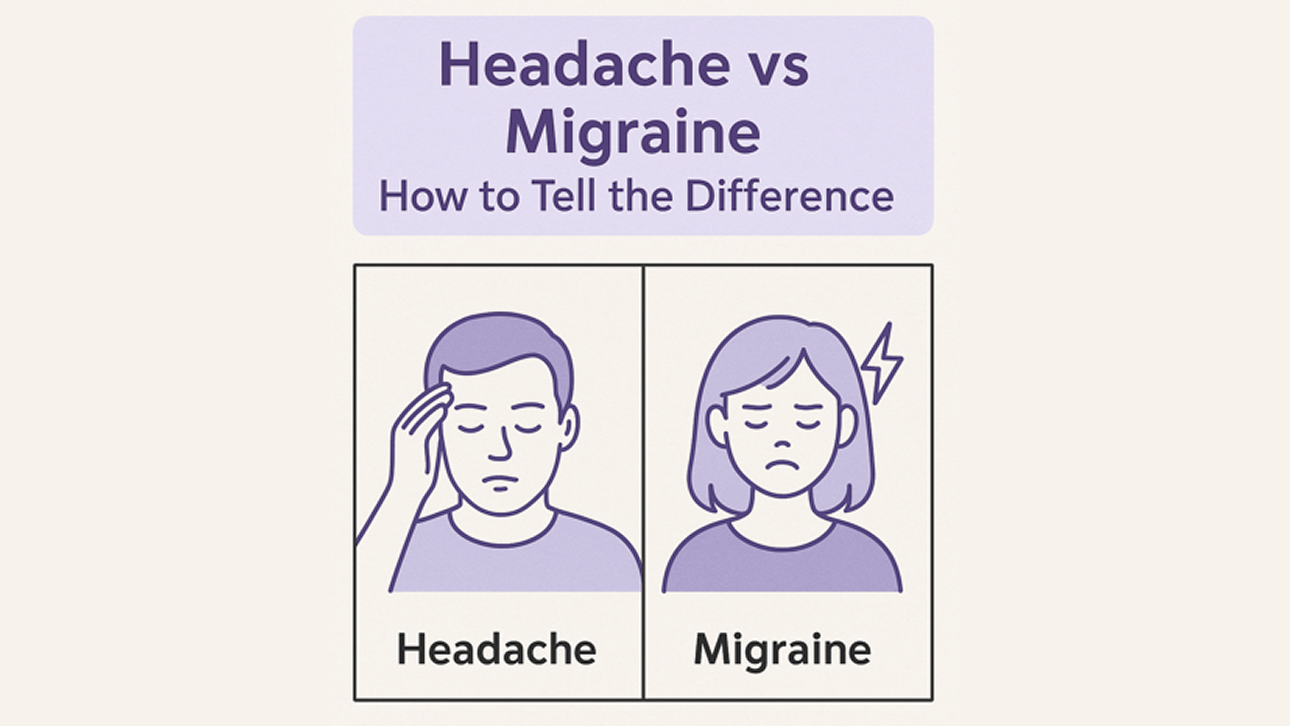
Headaches are one of the most common health complaints, but not all headaches are the same. While migraine is a well-known and often disabling neurological disorder, tension-type headache (TTH) and cluster headache also affect millions of people worldwide.
Distinguishing between these primary headache types is essential because treatment and long-term management differ. Understanding their unique patterns can help you describe your symptoms more clearly and get the right diagnosis.
Migraine: A Complex Neurological Condition
Migraine is not “just a bad headache.” It’s a complex neurological condition characterized by recurrent attacks of moderate to severe head pain.
Typical migraine features include:
- Location: Usually one-sided, though sometimes both sides are affected.
- Quality: Throbbing or pulsating pain.
- Intensity: Moderate to severe, often disrupting daily activities.
- Duration: 4–72 hours if untreated.
- Associated symptoms: Nausea, vomiting, and sensitivity to light, sound, or even smells.
Around 25–30% of people experience migraine aura, temporary neurological symptoms such as visual disturbances or tingling before the pain begins. Many also report prodrome (early warning signs) and postdrome (fatigue or brain fog after the attack).
Migraine is frequently misdiagnosed as sinus or stress headache. Recognizing its full spectrum of symptoms is key to proper management. According to research published in The Lancet Neurology, migraine remains one of the leading causes of disability worldwide.
Tension-Type Headache: The Everyday Headache
Tension-type headache (TTH) is the most common primary headache, often described as a “normal” or “stress” headache.
Common features include:
- Location: Usually both sides of the head.
- Quality: Dull, tight, or pressure-like sensation, as if a band is squeezing the head.
- Intensity: Mild to moderate, rarely severe enough to stop activity.
- Duration: 30 minutes to several hours, occasionally up to a few days.
- Associated symptoms: Typically none; mild light or sound sensitivity may occur but not both.
TTH is often linked to stress, poor posture, or muscle tension, but newer studies in the Journal of Headache and Pain show it also involves complex interactions between muscle and brain pain pathways.
While TTH is uncomfortable, it usually responds well to simple measures such as stress management, physical activity, proper sleep, and over-the-counter pain relievers.
Cluster Headache: The “Suicide Headache”
Cluster headache is the most severe and least common of the three. It affects less than 1% of people, often men between 20 and 40 years old.
Distinctive features include:
- Location: Always one-sided, centered around or behind one eye.
- Quality: Intense, stabbing, or burning pain.
- Intensity: Excruciating—many describe it as the worst pain imaginable.
- Duration: 15–180 minutes per attack.
- Frequency: Up to 8 attacks per day during a “cluster period.”
- Associated symptoms: Red or watery eyes, nasal congestion, eyelid drooping, and restlessness.
Cluster headaches occur in bouts (clusters) lasting weeks to months, followed by remission periods. Unlike migraine, they come on suddenly and demand urgent relief. Treatments such as high-flow oxygen and sumatriptan injections can provide rapid relief, while verapamil is often used as a preventive medication.
Key Differences at a Glance
| Feature | Migraine | Tension-Type Headache | Cluster Headache |
|---|---|---|---|
| Location | Often one-sided | Both sides (band-like) | Always one-sided, around one eye |
| Quality | Throbbing, pulsating | Dull, tight, pressure | Piercing, stabbing, burning |
| Intensity | Moderate to severe | Mild to moderate | Excruciating |
| Duration | 4–72 hours | 30 minutes–several hours | 15–180 minutes |
| Associated symptoms | Nausea, light/sound sensitivity | Usually absent | Eye redness, tearing, nasal symptoms |
| Frequency | Variable | Often stress-related | Multiple daily attacks during clusters |
Why Getting the Diagnosis Right Matters
Each headache type has different treatments and triggers, so an accurate diagnosis can dramatically improve your quality of life.
- Migraine: Managed with triptans, preventive medications, and lifestyle strategies like trigger avoidance.
- Tension-type headache: Often responds to simple analgesics, relaxation techniques, and posture correction.
- Cluster headache: Requires specific therapies like high-flow oxygen, sumatriptan injections, and preventive drugs such as verapamil.
A misdiagnosis—especially mistaking cluster headaches for sinus or migraine pain—can delay access to life-changing treatments.
Red Flags That Need Medical Attention
While most headaches are harmless, certain symptoms can indicate a serious underlying cause. Seek immediate medical care if you experience:
- A sudden, severe “thunderclap” headache.
- New headaches after age 50.
- Progressively worsening headaches.
- Headaches with fever, neck stiffness, confusion, or seizures.
- Headaches triggered by coughing, exertion, or sexual activity.
These could signal conditions such as bleeding, infection, or structural brain problems.
If you’re unsure about your headache type, a neurologist can provide a detailed assessment and help tailor your treatment plan.
Practical Tips for Managing Headaches
- Track your headaches: Keep a diary noting when attacks occur, how long they last, and what symptoms accompany them.
- Describe symptoms clearly: Note the pain’s location, quality, and associated features when speaking with your doctor.
- Avoid self-diagnosis: Online information can guide you, but only a qualified healthcare provider can confirm the diagnosis.
- Seek specialized care: Particularly for cluster headaches, which may require neurologist-led management.
Takeaway
Migraine, tension-type headache, and cluster headache each have distinct characteristics that guide diagnosis and treatment.
While migraine is the most disabling, tension-type headache is the most common, and cluster headache is the most severe.
By learning to recognize these differences and working closely with your healthcare provider, you can receive the right diagnosis and access treatments that significantly improve your daily life.
Explore More on Our Site
If you found this guide helpful, explore these related posts to deepen your understanding of migraine and other headache disorders:




Leave a Reply