

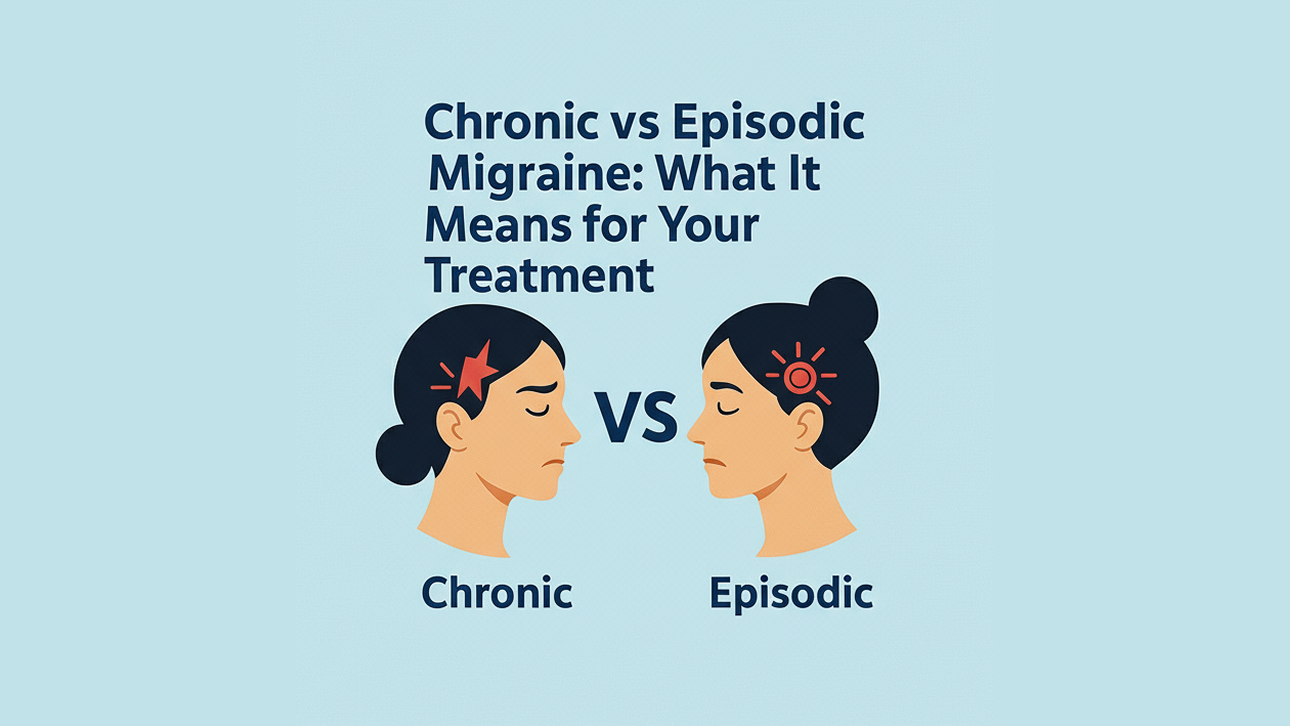
Understanding Chronic vs Episodic Migraine
If you live with migraine, the words “chronic” and “episodic” aren’t just labels—they shape your treatment plan and even your insurance coverage. Understanding chronic vs episodic migraine helps you make informed choices and work with your doctor to find the most effective therapies.
Definitions
Doctors classify migraine based on how many days per month you experience headaches:
- Episodic migraine: Fewer than 15 headache days per month.
- Chronic migraine: 15 or more headache days per month, with at least 8 that meet migraine criteria.
This distinction might sound small, but it can significantly affect what treatments you can access and how your healthcare team manages your condition.
Why the Difference Matters
Your migraine classification can determine whether certain treatments are covered or prescribed.
- Botox is FDA-approved only for chronic migraine, not episodic migraine.
- CGRP monoclonal antibodies (like Aimovig, Emgality, or Ajovy) and gepants (such as Nurtec or Ubrelvy) may also depend on your classification for insurance coverage.
That’s why it’s crucial to track your headache days accurately—a small difference in your count can change your treatment eligibility.
According to the American Migraine Foundation, proper documentation of headache frequency helps doctors confirm diagnosis and optimize care.
What You Can Do
Before your next appointment, try keeping a headache diary or using a migraine tracking app for at least one to two months. Note each headache’s severity, duration, and migraine-like features (such as nausea, light sensitivity, or aura).
- If your total headache days are close to the cutoff (14–16 days), it’s especially important to bring this record to your doctor.
- If your headaches improve with treatment and drop into the episodic range, your doctor may adjust your plan—but you’ll likely still follow chronic migraine guidelines until improvement is stable for several months.
🩺 For detailed advice on tracking and diagnosis, visit the National Headache Foundation or speak with your healthcare provider.
When to Talk to Your Doctor About Chronic vs Episodic Migraine
You should discuss classification and treatment with your doctor if:
- You’re close to the 15-day cutoff each month.
- Your headache pattern has changed recently.
- You’re considering preventive therapy or notice medication overuse.
Understanding whether you have chronic vs episodic migraine empowers you to make evidence-based decisions about your care.
Final Thoughts
Your migraine label isn’t just a medical term—it’s a roadmap to better management. By tracking your symptoms and partnering with your doctor, you can access more targeted treatments, reduce attack frequency, and improve your quality of life.Disclaimer





Leave a Reply